

Sorare's old backers return for a modest round after years of cuts
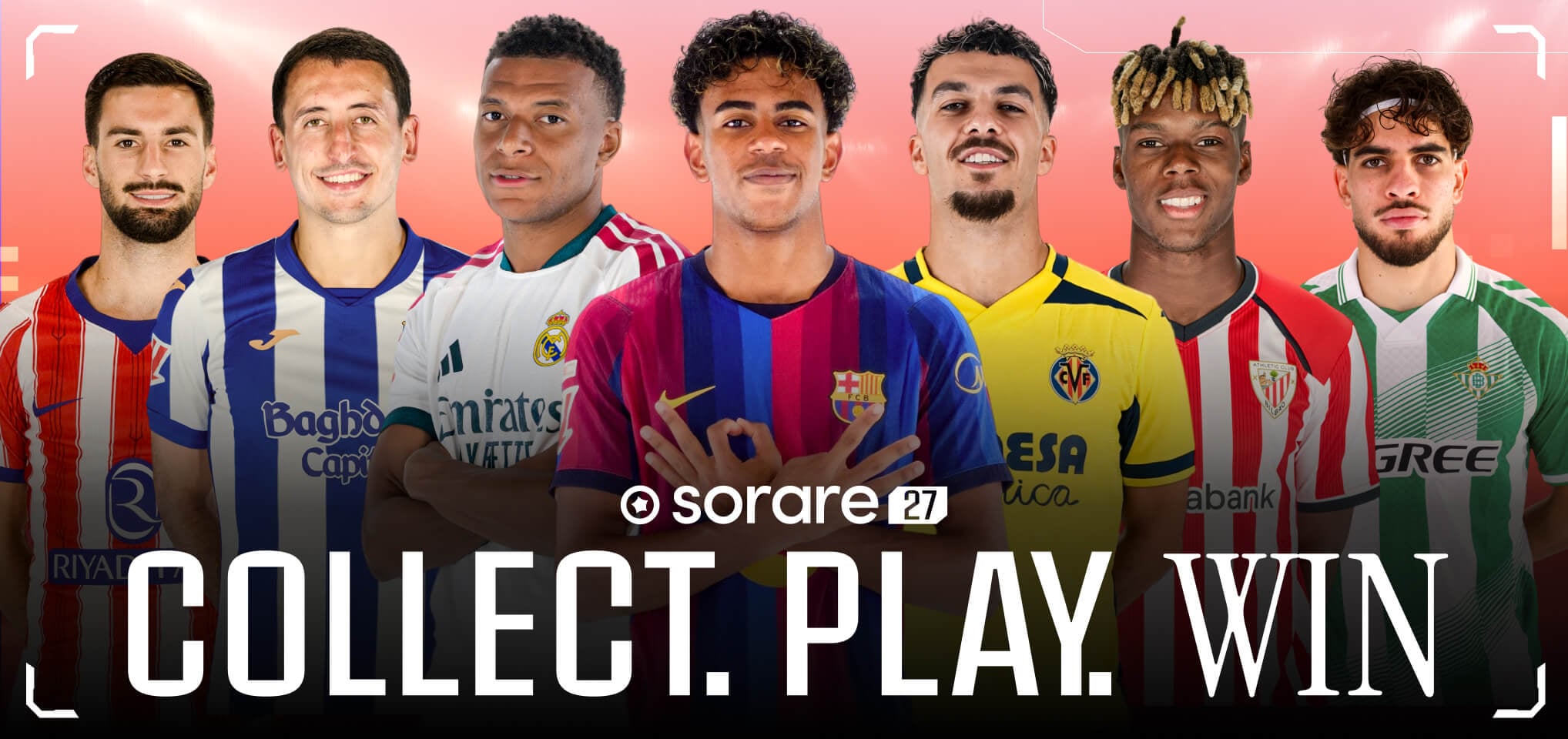

Sorare has closed a new funding round backed entirely by investors who already knew the company well. Accel, Benchmark, Partech and Kibo Ventures all returned for the raise, and co-founders Nicolas Julia and Adrien Montfort put in their own money alongside them. The Paris-based fantasy sports startup has not disclosed the amount, but Julia has described it as an "eight-figure" round, meaning tens of millions of euros rather than the hundreds of millions it pulled in five years ago.
The deal is structured in tranches: a first portion has already closed, with a second expected in the coming weeks and months. It is a far smaller and quieter deal than the $680m Series B that Sorare closed in September 2021, a round that valued the company at $4.3bn and briefly stood as a record for French tech, before Mistral AI topped it. That earlier round arrived at the height of the NFT and crypto boom, when investors were pouring cash into digital-collectible platforms across Europe and the US.
Why existing investors, not new ones
Having the same backers return, rather than bringing in new names, reads as a vote of continuity rather than a splash. Julia has said that getting Accel, Benchmark, Partech and Kibo Ventures to re-up, and investing himself alongside Montfort, was meant to demonstrate the founding team's staying power.
"It was important to show our long-term conviction and mark our renewal," Nicolas Julia said.
That framing matters because Sorare's last few years have been rough. Since the 2021 peak, the company went through falling revenue and a drawn-out internal reorganisation. In November 2025 it launched a job-protection plan that cut roughly 35% of its workforce, around 30 of its 110 positions, and closed its New York office. The fresh capital is meant to strengthen Sorare's cash position as it tries to turn that period around, rather than fund a big expansion.
Growth returning, profit still the target
The company says its underlying business is now accelerating again. Net revenue grew 85% year on year in the first half of 2026, compared with only 17% growth in the second half of 2025. More than 100,000 users, which Sorare calls Managers, bought cards during that period, a figure the company says tops what it saw during the 2021 growth wave. More than 1 million new users have joined in the past 18 months, taking Sorare's user base past 3 million.
Much of that momentum is tied to Arcade, a free-to-play game mode Sorare launched in January 2026 that does not require buying digital player cards to compete. Its early traction persuaded the company to put more money behind it rather than less.
"The early results exceeded our expectations. So we decided to accelerate and invest a little more. Arcade is a bit like a startup within the startup," Julia said.
Sorare is targeting €15m to €20m in net revenue from Arcade this year alone. A second free-to-play product, called Snatch, is being tested in several markets and is due to launch in France shortly; Julia has pitched it as more mainstream than Arcade, with the potential to reach tens of millions of users. The football World Cup held in the US over the summer also gave the platform a lift in engagement, which Julia said acted as a catalyst for renewed growth, and he described the company's momentum as strong again.
Sorare still has not reached profitability, which it is now targeting for the end of 2027. For a company that raised hundreds of millions during the NFT boom and then had to cut a third of its staff, that target is the real test of this round: whether a leaner Sorare, built around free-to-play products rather than card trading alone, can convert renewed user growth into a sustainable business before the next funding conversation comes around.
Sorare's business still rests on official licensing deals with more than 300 clubs and leagues, including the NBA, MLS, the Premier League, La Liga, the Bundesliga and the Eredivisie, giving it a distribution footprint that few European sports-tech startups can match. Whether that network translates into profit, rather than just user numbers, is the question this new money is meant to help answer.
What did you think of this story?
Written by
John Pulisic
92 stories on European Startup Insider
Have a story like this? Pitch it to us.
We publish founder profiles, company news and practical guides from across Europe.
More stories like this



bunq profit jumps 65% to €85.3m as it files for US broker-dealer licence
Amsterdam's bunq posted €85.3m in 2024 profit and applied for a US broker-dealer registration, a first step toward the full banking charter it abandoned a year earlier.