
Langdock spends millions to swap its US holding for a German SE as revenue run rate hits $50m
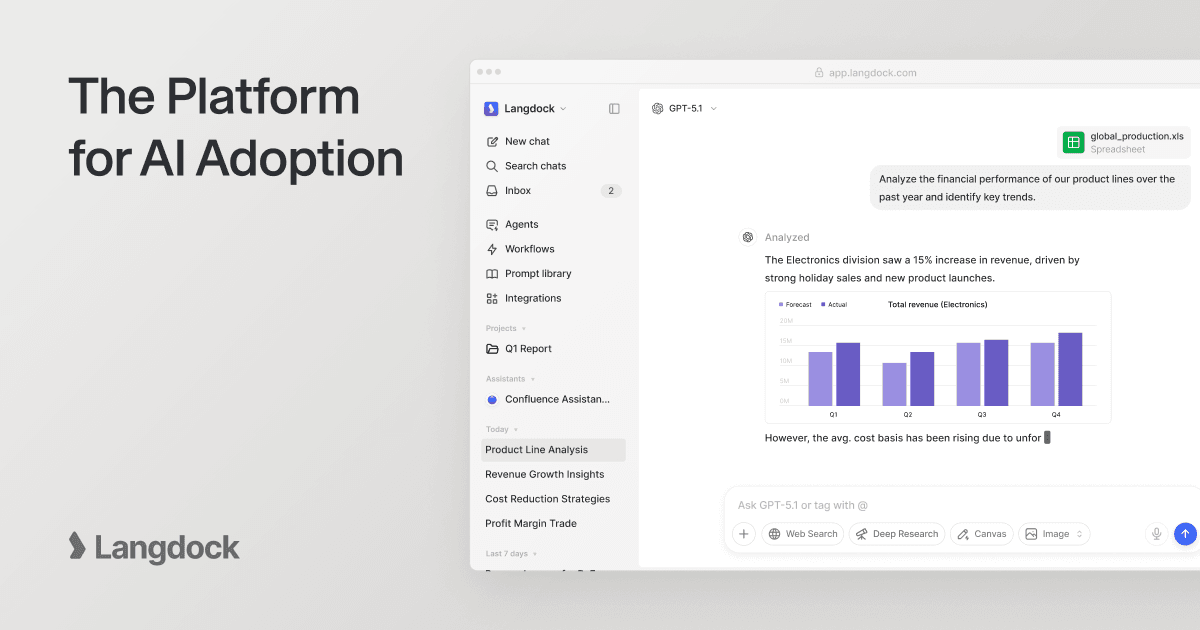

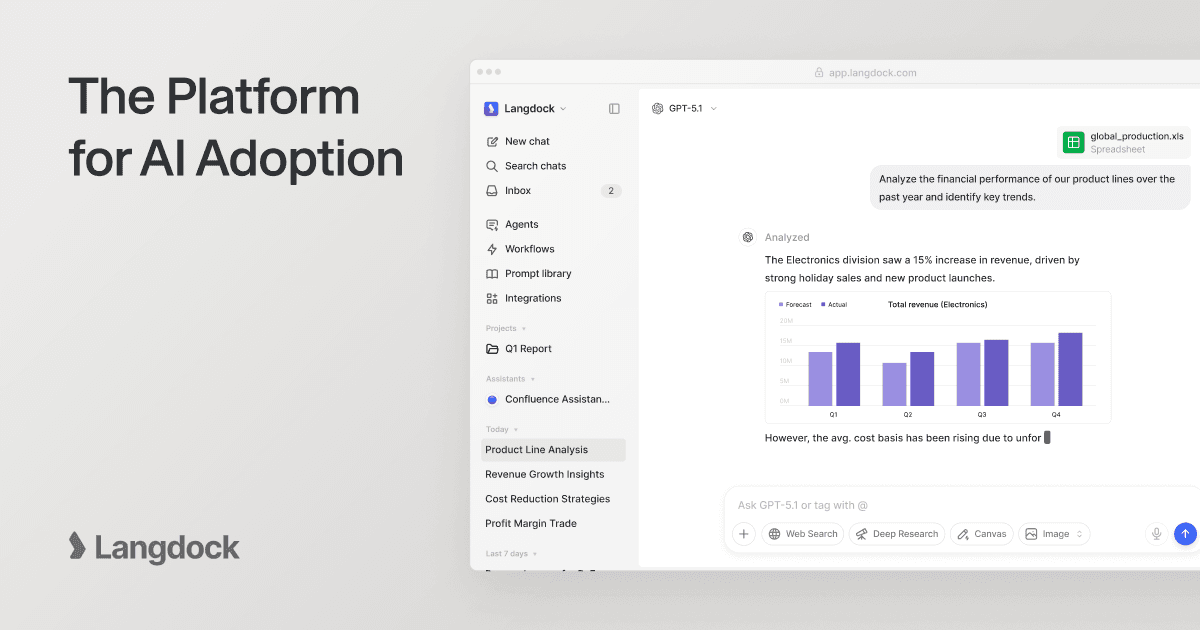
Langdock, the Berlin company that sells a workplace AI platform to about 13,000 organisations, has replaced its US parent company with a Societas Europaea registered in Germany. The restructuring began early in 2026, cost several million euros and is now finished, the company said.
The move runs against one of the most familiar habits in European tech. Founders often set up an American holding company to make themselves easier to fund, especially after joining a US accelerator. Langdock did exactly that, and has now spent real money undoing it.
Why the US parent became a sales problem
Langdock was founded in 2023 by Lennard Schmidt, Jonas Beisswenger and Tobias Kemkes. Its product gives staff access to several AI models from one workspace and lets companies hook those models up to internal data and tools, build agents and automate routine work. It holds ISO 27001 and SOC 2 Type II certifications and markets itself on GDPR compliance.
The company said the US entity was useful at the start. It helped bring in investors and gave the team access to the Y Combinator network. Its April 2024 seed round of $3m was led by General Catalyst and La Famiglia, with Y Combinator taking part.
But the American parent never did much. According to Langdock, it had no employees, no infrastructure and no access to production systems; the operations and the customer data stayed in Germany throughout. Even so, the structure created work for buyers. Legal teams at client companies had to check whether a US owner exposed them to data-protection or legal risk, a worry fed by laws such as the US Cloud Act, which has raised fears that American authorities could demand access to data held by US-controlled firms.
Taking the US layer out makes the company's European set-up easier to explain to customers, Langdock said, particularly when geopolitics are unsettled. It also said it is now big enough to handle the heavier governance rules that come with an SE.
“We believe Europe is a strong place to build a global technology company, and we want to contribute to its sovereignty and competitiveness,” the company said.
Who owns Langdock, and what it is not changing
Roughly 80% of the shares belong to founders and employees living in the EU. The company said the new legal form does not alter its plans to sell to customers around the world or to take money from international investors. That point matters to founders weighing the same choice: the usual argument for a US flip is that American funds prefer a US entity, and Langdock is betting it can raise without one.
The growth figures give it some room to make that bet. Langdock said its annualised subscription revenue reached $50m in August, compared with $1m in October 2024. That is a run-rate figure, an extrapolation of current recurring sales over twelve months, not booked annual revenue. It is still a steep climb for a company that has only one priced round on public record, the 2024 seed.
For investors, the case is also a sign of where enterprise demand is heading. Langdock's pitch to large German firms and the Mittelstand rests on keeping data under European control while letting staff choose among models. Removing the US holding puts the legal structure in line with that pitch, rather than relying on contracts and assurances to cover the gap.
From software layer to its own data centre
The longer-term plan is bigger than a change of corporate paperwork. Langdock said it wants to build a sovereign, full-stack AI platform that could in time compete with the large US cloud providers. It intends to launch three new services before the end of the year and to run open-source models and sell computing capacity from its own data centre in Germany.
The company said it will start small with that infrastructure and add capacity as customers ask for it. That caution is sensible given the scale gap. Amazon Web Services alone generated $128.7bn in revenue in 2025, more than 2,500 times Langdock's current run rate.
Moving from an application layer that sits on top of other people's models into owning hardware is also a different business, with different capital needs. Langdock has not said how it will pay for the data centre or how large it will be.
The restructuring turns a common talking point about European digital sovereignty into a concrete test. If Langdock can keep raising from international funds as a German SE while its compliance story wins deals, other European AI companies that set up US parents for convenience may start to count the cost of keeping them. The next markers are the three services promised for the end of 2026 and the first workloads running on its own German hardware.
What did you think of this story?
Written by
Sandra J. Barbara
44 stories on European Startup Insider
Have a story like this? Pitch it to us.
We publish founder profiles, company news and practical guides from across Europe.
More stories like this





Snyk founder Guy Podjarny's Tessl raises $125m across seed and Index-led Series A for spec-first coding
London-based Tessl, the AI developer-tools startup from Snyk founder Guy Podjarny, has disclosed $125m in funding: a $25m seed and a $100m Series A led by Index Ventures, months before any product ships.