

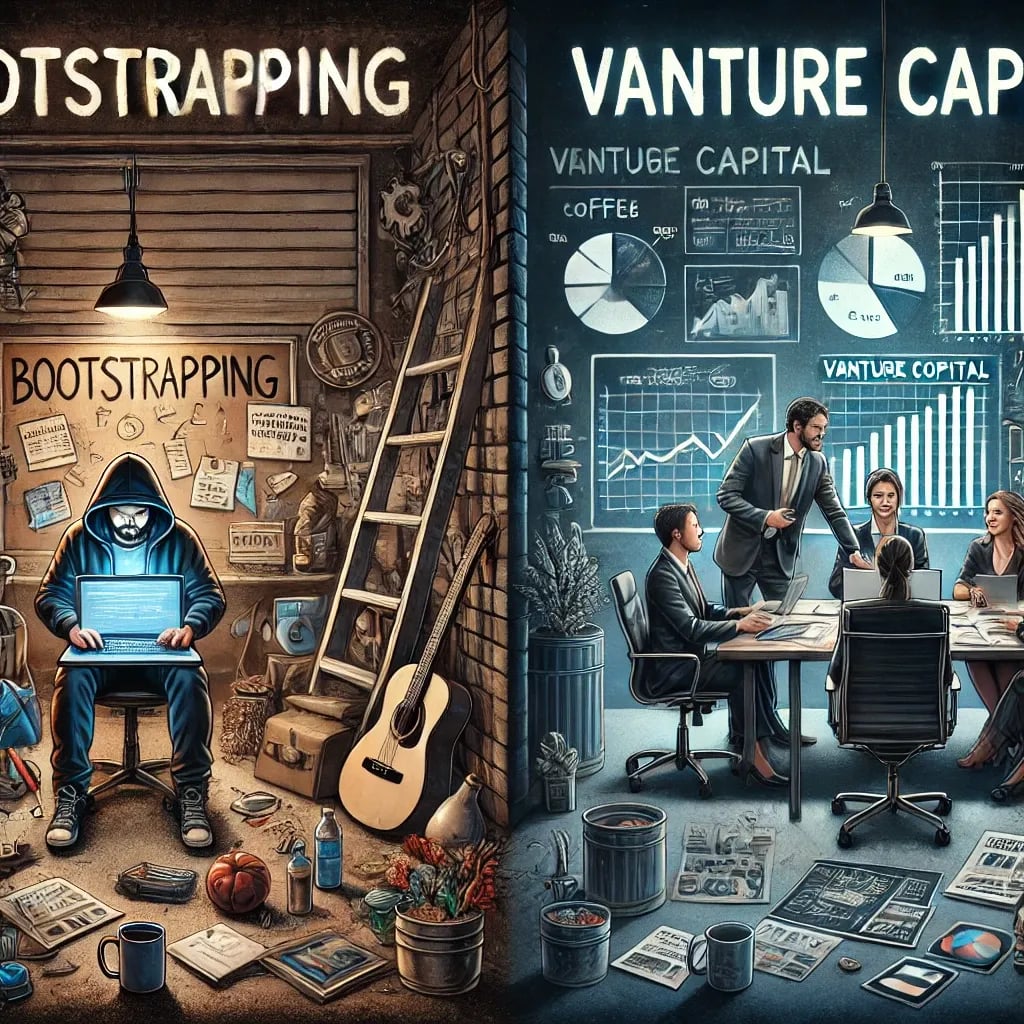
Bootstrapping vs. Venture Capital: Weighing the Risks and Rewards
The Funding Dilemma: In the dynamic and competitive European startup ecosystem, aspiring founders face a pivotal decision: should they secure seed funding before building their Minimum Viable Product (MVP), or bootstrap and develop their MVP before seeking venture capital? This article delves into…

The Funding Dilemma:
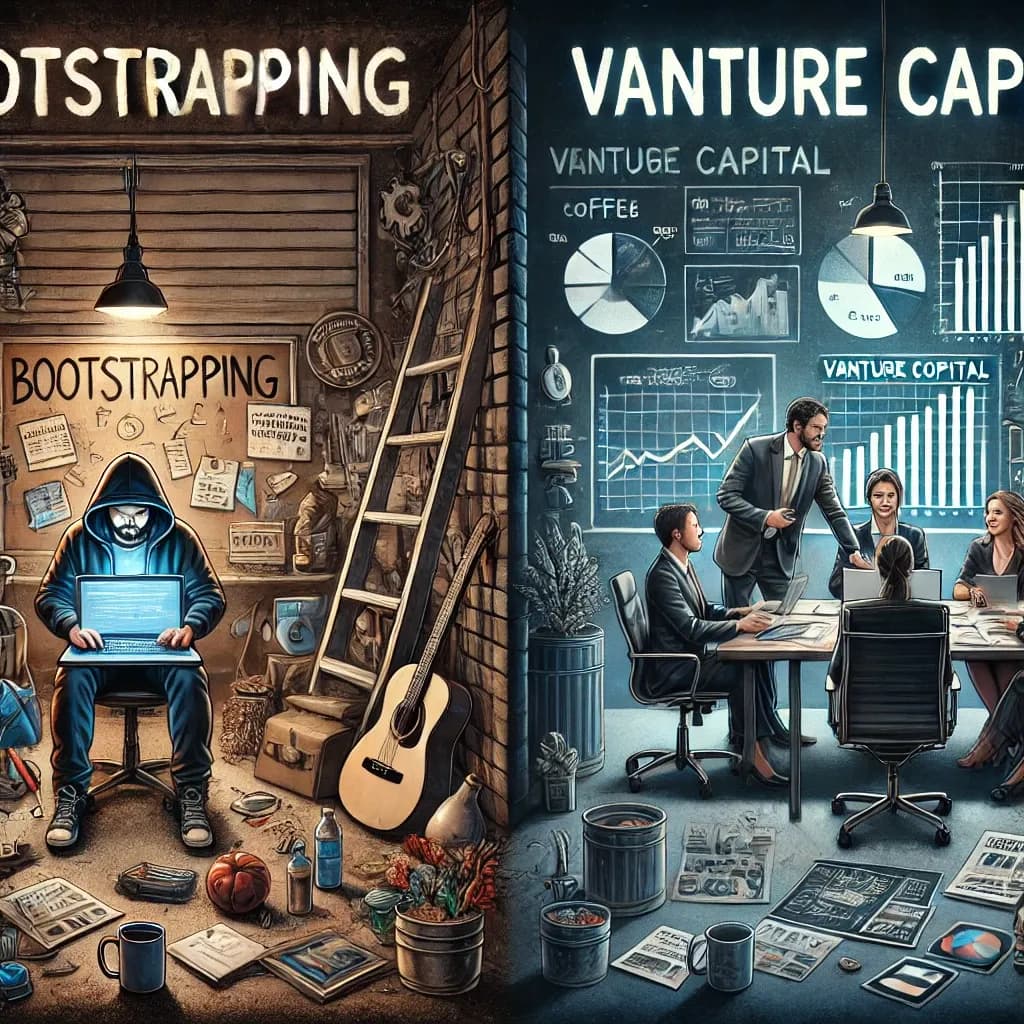
In the dynamic and competitive European startup ecosystem, aspiring founders face a pivotal decision: should they secure seed funding before building their Minimum Viable Product (MVP), or bootstrap and develop their MVP before seeking venture capital? This article delves into the pros, cons, challenges, and benefits of each approach, providing crucial insights for navigating the European startup landscape.
My own money buys me freedom. Investor money buys me speed. I had to choose which I valued more.
The “Funding First” Approach: Securing Capital Before Building
This strategy involves pitching a concept and securing pre-seed or seed funding based on a strong business plan and a compelling team.
Pros:
- Financial Runway: Immediate access to capital allows for rapid team building, resource acquisition, and focused development without immediate revenue pressure.
- Talent Acquisition: Funding enables attracting top-tier talent, crucial in the competitive European tech talent market.
- Accelerated Growth: Capital can fuel faster development and marketing efforts, potentially leading to quicker market penetration.
- Validation through Investment: Securing funding acts as initial market validation, boosting confidence and credibility.
Cons:
- Dilution of Equity: Early-stage funding often results in significant equity dilution.
- Investor Pressure: Investors may exert pressure for rapid growth and specific milestones, potentially limiting flexibility.
- Concept Risk: Without a tangible product, investors are betting on a concept, increasing the risk of failure.
- Difficult to Secure Funding Without MVP: Especially in the current economic climate, investors are more risk-averse.
Challenges:
- Convincing investors of a concept without a working prototype.
- Demonstrating market demand and scalability without empirical data.
- Navigating the complex landscape of European funding options (angel investors, VCs, grants).
If you’re not willing to invest in yourself, why should anyone else?
Real-Time Facts and Figures (European Context):
- According to Dealroom, European VC investment in 2023 dropped to €50 billion, a sharp decline from €88 billion in 2021.
- Early-stage funding rounds fell by 40%, making it harder for idea-stage startups to secure capital without an MVP.
- European deep tech startups, like those in AI and biotech, often require substantial upfront capital, making the “funding first” approach more common.
- European government initiatives, such as Horizon Europe (€95.5 billion fund) and the EIC Accelerator (up to €2.5 million per startup), offer non-dilutive funding opportunities, but competition is fierce.
The “MVP First” Approach: Bootstrapping to Validation
This approach involves building a functional MVP with personal funds or through bootstrapping, demonstrating product viability before seeking external investment.
Pros:
- Reduced Equity Dilution: Founders retain greater control and ownership.
- Market Validation: A working MVP provides tangible evidence of product viability and market demand.
- Increased Investor Confidence: Investors are more likely to invest in a proven product with demonstrated traction.
- Greater Flexibility: Founders maintain more control over product development and strategic direction.
Cons:
- Limited Resources: Bootstrapping restricts resources, potentially slowing development and marketing efforts.
- Time Constraints: Building an MVP while managing other responsibilities can be time-consuming and challenging.
- Personal Financial Risk: Founders bear the full financial burden, increasing personal risk.
- Slower Growth: Without external funding, growth may be slower compared to funded startups.
Challenges:
- Developing a functional MVP with limited resources.
- Generating initial traction and user feedback without a significant marketing budget.
- Scaling the MVP to meet growing demand.
Benefits:
- Proof of Concept: Demonstrating a working product.
- Customer Feedback: Gaining valuable insights from early adopters.
- Stronger Negotiation Position: Approaching investors with proven traction.
- Lean Startup Principles: Building and validating with minimal waste.
Taking investor money isn’t just about the cash; it’s about gaining strategic partners who can open doors.
Real-Time Facts and Figures (European Context):
- The rise of “lean startups” and affordable cloud-based tools (AWS, Google Cloud) has made building MVPs more accessible in Europe.
- Many successful European startups, particularly in SaaS and consumer apps, initially bootstrapped their MVPs before raising funding.
- Micro VC funds and angel investors are increasingly looking for MVPs with early traction before investing.
- In 2023, 65% of European startups that secured Series A funding had already built an MVP with significant traction before raising capital.
Which Approach is Right for You?
The optimal approach depends on several factors, including:
- The nature of the business and industry (e.g., deep tech startups often require funding first, whereas SaaS startups can be bootstrapped).
- The founder’s financial resources and risk tolerance (those with capital may choose to bootstrap first).
- Current market conditions and investor sentiment (funding availability fluctuates based on economic cycles).
- The founder’s network (strong investor connections can help secure pre-seed funding).
Conclusion
In the competitive European startup ecosystem, both approaches have their merits. Founders must carefully evaluate their resources, market conditions, and long-term goals to determine the best strategy. While securing seed funding can accelerate growth, building an MVP first provides valuable validation and reduces equity dilution.
Regardless of the chosen path, a strong team, a compelling product, and a clear vision are essential for success in the dynamic European startup landscape. Founders should also explore diverse funding options in Europe, including angel investors, venture capital, government grants, and EU funding programs to find the best fit for their startup journey.
Stay updated with the latest insights from the European startup ecosystem at www.EuropeanStartupInsider.com – your daily source for breaking news, expert analysis, and startup success stories.
What did you think of this story?
Written by
Muhammad Farooq Rathod
24 stories on European Startup Insider
Have a story like this? Pitch it to us.
We publish founder profiles, company news and practical guides from across Europe.
More stories like this





Launching with Limited Seed Funding – Is the Risk Worth the Reward?
Securing adequate funding. While record-breaking funding rounds often make headlines, many founders grapple with the harsh reality of launching with less capital than ideal. This raises a crucial question: Is it a good idea to start working on a startup knowing the received investment is not even…