

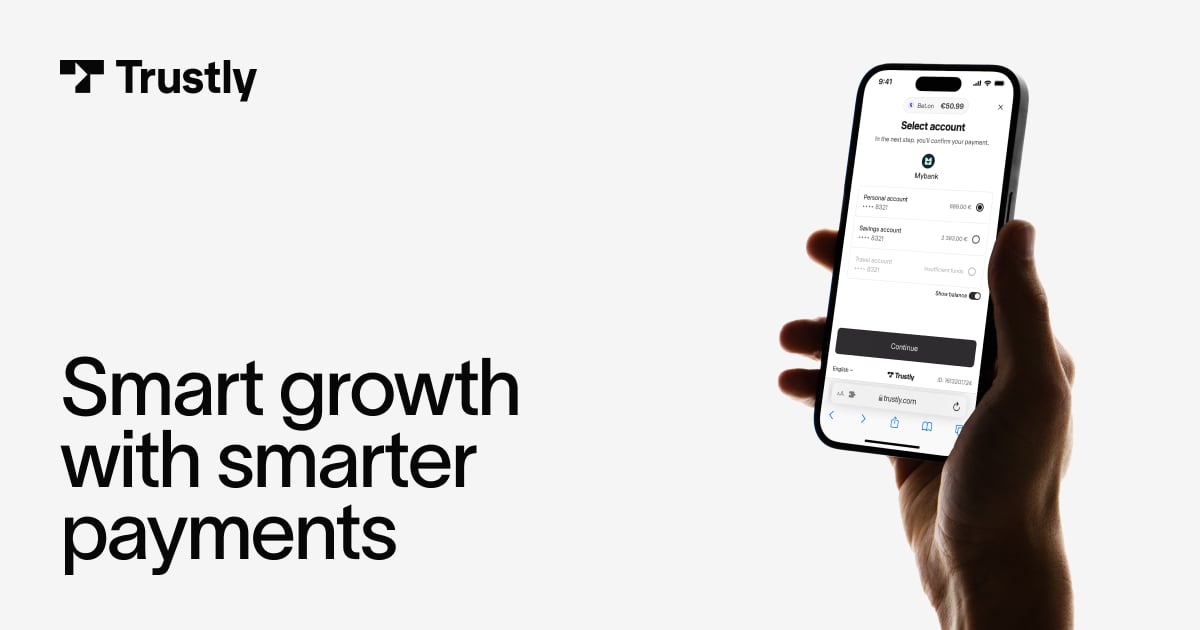

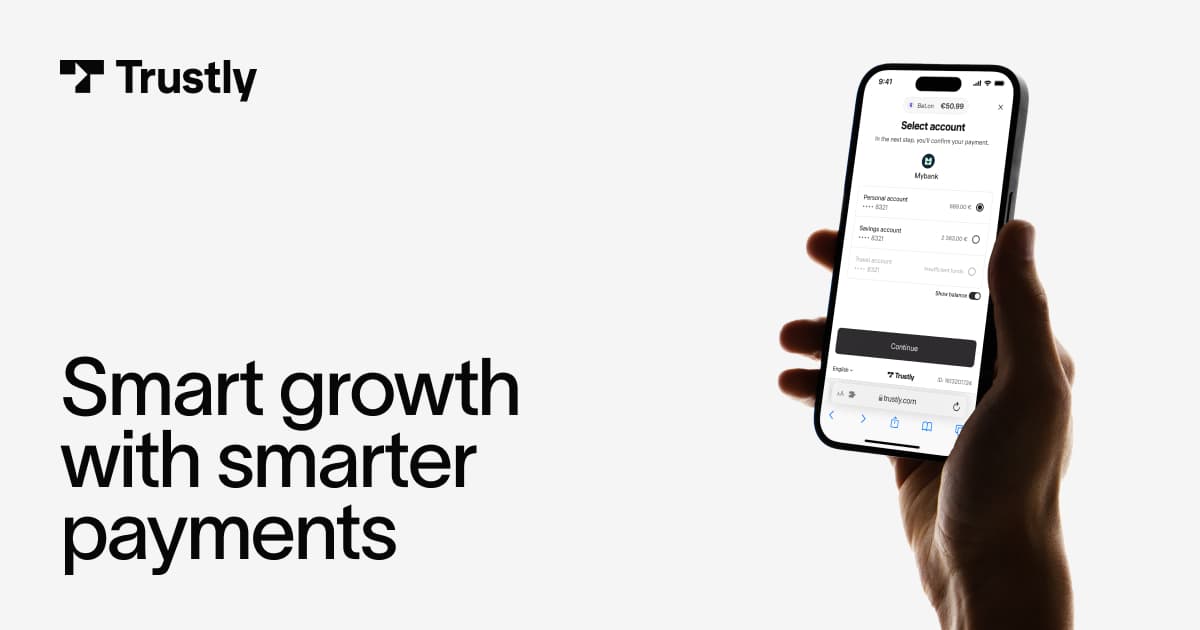
Trustly, the Swedish fintech that pioneered open banking payments, reported net revenue of $239 million for 2024, up 32 per cent from the prior year, with adjusted EBITDA jumping 50 per cent to $73.2 million. The company processed $87 billion in total payment value, up 54 per cent year-on-year, painting a picture of a business that is growing quickly while becoming more efficient.
The Stockholm-founded firm is now 17 years old, well past the early-stage venture phase. Growing revenue by nearly a third whilst expanding EBITDA by half shows a company that has figured out its unit economics. For European founders and investors, the results signal that open banking (payments drawn directly from a consumer's bank account, bypassing card networks) has moved from niche to mainstream.
Trustly's growth in 2024 came from two sources: geographic expansion and product innovation. In Europe, the company renewed its contract with HMRC, the UK's tax authority, which runs the continent's largest open banking mandate. This renewal demonstrated institutional confidence in the platform. Monthly payment volumes through HMRC climbed sharply in early 2025, reaching 1.3 million transactions worth £4.7 billion in January, compared to a lower volume in the previous year. New merchant clients like Lenovo, foodora and ITV joined the platform during 2024, expanding Trustly's reach across e-commerce, payments and media.
North America delivered similar growth. Strategic partnerships with BNY's Bankify, Coinbase, IGT, and gaming operator Light & Wonder brought fresh transaction volumes. The company also expanded its collaboration with Cross River Bank to include access to the US Federal Reserve's FedNow instant payments system and the Real-Time Payments (RTP) network. By year-end, Trustly had moved $17 billion through RTP, showing genuine adoption of faster payment rails.
Where the growth comes from
Two new product initiatives accelerated 2024's performance. In June, Trustly launched an AI-powered recurring payments tool to tackle involuntary churn in subscription models. Instead of storing card details, merchants can now process repeat transactions directly from customers' bank accounts through a single integration. The product solves a live problem for subscription platforms: failed charges and payment friction.
Equally important was the deeper adoption of Azura, Trustly's proprietary data engine. Azura draws on transaction data from billions of interactions across merchants, consumers and banks to recognise users across devices and sites. Merchants report higher conversion rates and higher spend-per-customer when Azura is activated. The insight suggests that open banking is not just cheaper than card payments; it can improve customer experience when combined with smart data layers.
Both products show how Trustly is positioning itself: not as a cheaper alternative to Visa and Mastercard, but as a new foundation for payments infrastructure. The company's pitch to merchants covers lower fraud risk, lower costs, faster settlement and, with Azura, better customer understanding.
The IPO question
Trustly remains private, backed since 2018 by Nordic Capital alongside investors including BlackRock, Alfvén & Didrikson, and Neuberger Berman. The company has a team of 921 people spread across operations in its core markets. No public date has been set for an IPO, though the company was exploring the option within a one-to-two-year window as of mid-2024.
The 2024 results bolster the case for a public listing. Profitable growth, geographic diversity and institutional validation (the HMRC contract, partnerships with major financial infrastructure providers) tick the boxes that public market investors expect. The question for 2025 is not whether Trustly is ready, but whether the market is. Open banking has moved from a European curiosity to a global trend. Trustly's numbers suggest the company is ready to scale the opportunity.
What did you think of this story?
Written by
John Pulisic
92 stories on European Startup Insider
Have a story like this? Pitch it to us.
We publish founder profiles, company news and practical guides from across Europe.
More stories like this







From MVP to Funding: A Tactical Guide to Winning European Grants (Without Diluting Equity)
European Founders to Secure Non-Dilutive Funding and Scale Beyond the MVP Stage Launching a startup is a major achievement, especially after building a Minimum Viable Product (MVP). This milestone validates your core idea and signals readiness for market entry. For Europe-based startups looking to…