

Gallium Defense comes out of stealth with €7.1m to build a low-cost radar from 5G and GPU parts
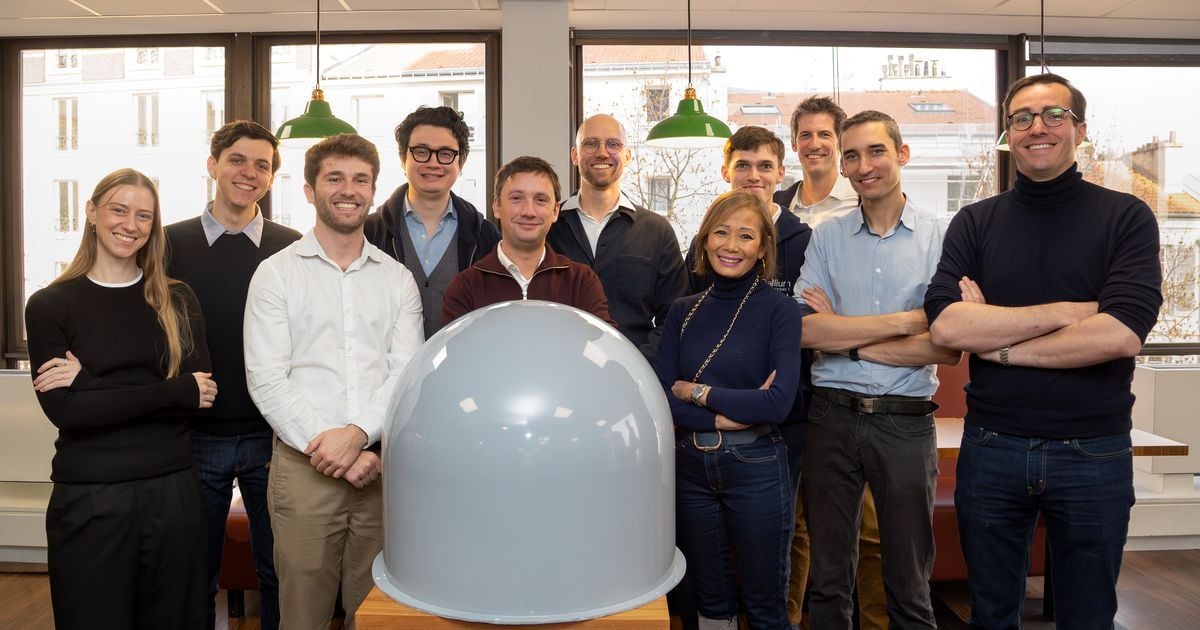

Gallium Defense, a Paris radar start-up founded only in April, has raised a €7.1m seed round to build a drone-detection radar out of components borrowed from the telecoms and computing industries. Keen Venture Partners and 360 Capital led the round, with Omnes Capital and Polytechnique Ventures also taking part.
The company announced the deal on 2 November as it came out of stealth, although the round itself closed in June, according to its website. The pitch is aimed squarely at one of Europe's most pressing procurement problems: cheap drones are now everywhere, and the radars built to find them are expensive, scarce and slow to produce.
A radar assembled from the 5G supply chain
The product is called the GDS-10. It is a software-defined X-band radar with an active electronically scanned array, designed to pick up small first-person-view drones at distances of up to 10km. The company's target specification covers a full 360 degrees horizontally and 90 degrees vertically, swarm tracking, resistance to jamming and operation day and night in any weather. There will be two variants, one for the military and one for sites such as airports, ports, energy plants and data centres.
Chief executive Eric Fournier describes the system in three parts: the antenna, the processing unit and the high-speed link between them. For the antenna, the team uses gallium-based amplifiers of the kind mass-produced for 5G base stations. Because the GDS-10 carries roughly 512 antenna elements, a small saving on each one adds up, and the company says it has cut the unit cost of its antenna by more than ten times.
Processing runs on Nvidia GPUs rather than the specialised, power-constrained chips usually found in military radars. Fournier's argument is that a radar guarding a fixed base does not need to sip electricity, and he claims the approach gives more than 100 times the computing capacity of some conventional designs. The link between antenna and computer reuses optical technology from telecoms.
“If you really want to be effective at the speed of the war in Ukraine, you can't reinvent physics,” said Eric Fournier, CEO and co-founder.
The founders are three former Boston Consulting Group colleagues. Fournier spent 17 years advising defence and aerospace clients. Chief technology officer Florian Lemoine worked with NATO and with France's defence procurement agency, the DGA, while chief operating officer Robin Mandel came from engineering and computing roles at Thales and Safran. They worked with Inoveos, a French firm specialising in high-power radio-frequency hardware, and tested a small antenna in an anechoic chamber in December 2025, months before incorporating.
Work on the first two prototypes started in June. Gallium Defense says it has two working antennas and has detected Class 1 drones at 10km, though those tests took place in good weather with targets whose positions were known in advance. The team updates the system every fortnight and runs field trials each month. The company's own records put its first open-air trials in October.
Where the €7.1m goes
The immediate job is industrialisation. Gallium Defense employs about 15 people and plans to reach roughly 50, adding manufacturing capacity, a supply chain and a sales operation. The round also pays for more prototypes, AI work on signal processing and classification, and demonstrations for operators in Europe and NATO-allied countries. Orders are due to open in the first quarter of 2027.
Fournier sees an opening between two groups of products. Cheaper systems on the market mostly work at ranges under 5km, while high-end radars from Raytheon, Thales, Hensoldt and Saab reach much further at a far higher price. Spotting a fast drone at 10km instead of 2km can buy defenders several extra minutes. A cheaper sensor also changes how it can be used: operators could buy several for the budget of one, accept that some will be lost, and move them in turns without leaving a gap in coverage.
Selling to the primes, not competing with them
The business model is unusual for a venture-backed defence company. Gallium Defense does not want to be a prime contractor or sell a full counter-drone platform. It wants to be a component supplier that larger integrators build into their own systems. Fournier said this was a hard sell at first, and the founders thought about going ahead without outside money until Keen, a Dutch fund, backed the idea. Other investors then followed, and the round closed faster than the team had expected.
“Our plan is to be a great supplier and to be integrated by the primes,” Fournier said. The company is negotiating five possible memoranda of understanding. The radar supports the NATO-standard SAPIENT and ASTERIX interfaces so its data can feed existing command-and-control software, and it is built from three modules that can be made separately. That opens the door to white-label deals and licensed assembly by partners in other countries.
Manufacturing will be European, but the company is also talking to partners further afield, with NATO and allied states as its main market and its dual-use hardware subject to export controls. Its advisers include General Philippe Lavigne, a former NATO Supreme Allied Commander Transformation, and General Autellet, once deputy chief of the French defence staff.
Electronic warfare is one area the team might move into next, applying the same off-the-shelf approach, though Fournier said no decision has been made. The nearer tests are commercial. Gallium Defense lists IDEX in Abu Dhabi in January and the Paris Air Show in June 2027 among its next stops, and those months will show whether the five MoUs under discussion become first orders.
¿Qué te ha parecido este artículo?
Escrito por
Jascinta Clark
47 artículos en European Startup Insider
¿Tienes una historia como esta? Cuéntanosla.
Publicamos perfiles de fundadores, noticias de empresas y guías prácticas de toda Europa.
Más artículos como este





Kabilio lands €10m from Picus and Visionaries to put an AI agent inside Spanish accounting firms
Barcelona's Kabilio has raised €10m, with Spain's CDTI joining its two existing lead backers, to launch an AI agent for accountants. Its customer base has grown from about 100 firms to nearly 500 in a year.