

Synthesia Raises $200M Series E at $4B Valuation to Build AI Video Agents
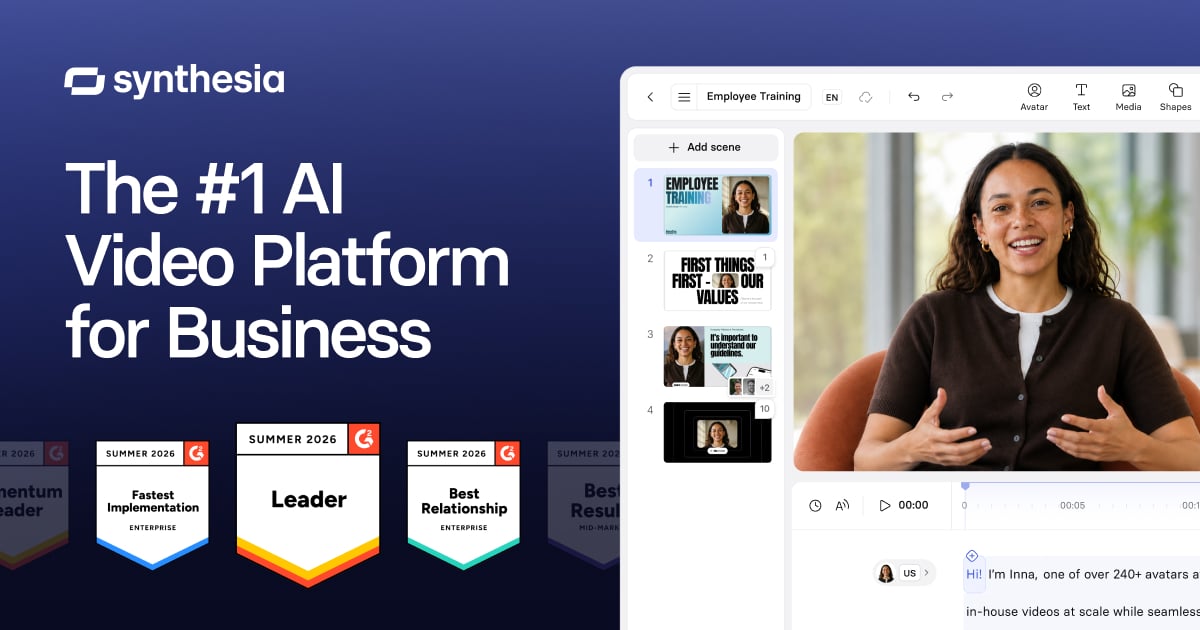

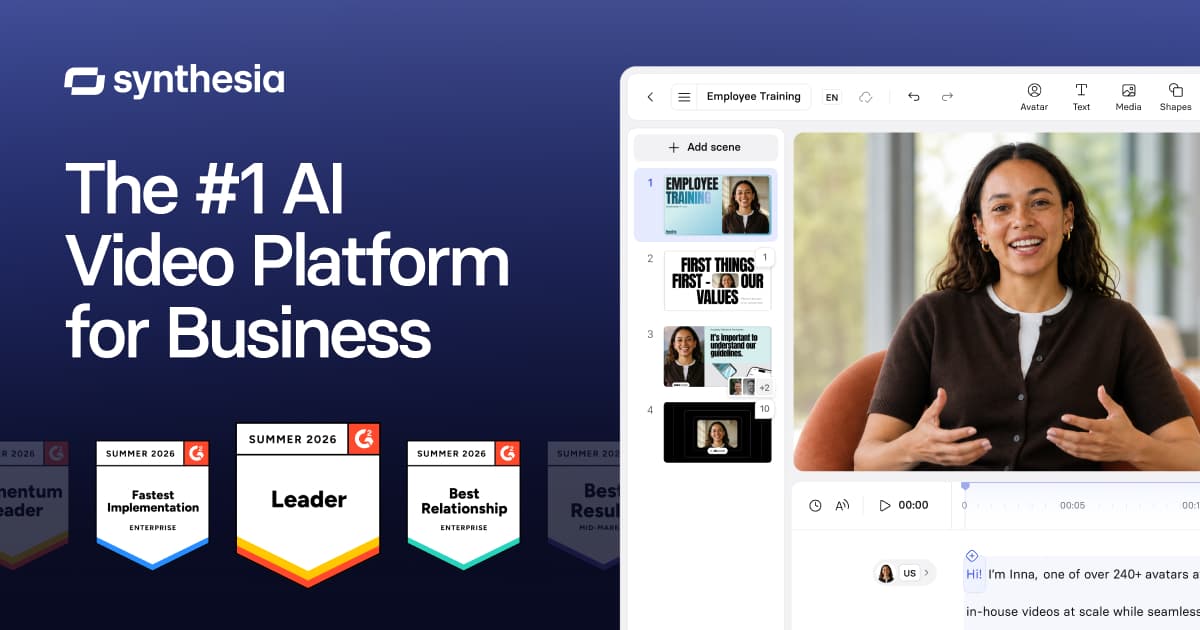
Google Ventures led a $200 million Series E for Synthesia on January 26, valuing the London-based AI video platform at $4 billion. That doubled the startup's worth from $2.1 billion a year earlier. The round also included investments from Nvidia's venture arm, Evantic, Hedosophia, and returning backers including Accel, Kleiner Perkins, New Enterprise Associates, PSP Growth, Air Street Capital, FirstMark, and MMC Ventures. Synthesia is now among the highest-valued generative AI companies based in Europe.
The company now sits on over $500 million in total funding across six rounds since 2017. This latest round reflects investor confidence in Synthesia's path to profitability and its focused strategy in enterprise AI.
Victor Riparbelli, Synthesia's chief executive and co-founder, said the round was timed to capture two converging shifts: AI agents becoming more capable, and enterprises treating workforce upskilling and knowledge sharing as board-level priorities. "We see a rare convergence," Riparbelli told reporters. He said the company planned to build "the defining company at that intersection, by combining our know-how in AI video with our ability to build and integrate AI technologies into products."
Enterprise revenue accelerates past $150 million
Synthesia's core business already operates at scale. The platform brought in $150 million in annual recurring revenue and is forecast to reach $200 million by the end of 2026. A 26-times-revenue multiple is steep for business software, yet aligns with how investors value AI infrastructure: assuming years of continued expansion from a large installed base. The company's growth rate is rare among enterprise video tools and justifies the premium valuation.
The company's customer base reinforces its enterprise positioning. Synthesia serves 90 percent of the Fortune 100, including major corporations like Bosch, Merck, and SAP. That concentration reflects two factors. The core product is strong: a platform that generates professional videos using AI avatars and voiceovers in over 140 languages. More importantly, selling into the world's largest companies has created a durable competitive moat. These firms maintain strict security and compliance standards that few competitors can meet.
A shift toward conversational agents
Rather than pour capital into scaling its existing video platform, Synthesia plans to use the Series E to build what it calls Video Agents. These are AI systems designed specifically for enterprise learning and upskilling, moving beyond passive, template-based content generation toward conversational experiences where employees can ask questions, explore scenarios through role-play, and receive tailored explanations.
Early customers piloting these new products have reported higher engagement and faster knowledge transfer than traditional training formats, according to the company. The strategic shift signals confidence that the next wave of enterprise AI adoption will reward depth in learning and development rather than breadth across general-purpose video tools. It also places Synthesia in competition not just with video software but with learning platforms and training tools.
The company faces entrenched rivals. Microsoft, Google, and Salesforce each possess video tools and global enterprise sales forces. Yet Synthesia is betting that no giant will match its focus on learning-specific use cases. Competitors cannot easily replicate its avatar realism, its depth of integration with learning management systems, or the compliance standards it has built for Fortune 100 companies. As language models become better at video, specialized tools matter more than generic ones.
Employee liquidity alongside institutional capital
A less visible component of the round reflects Synthesia's maturity. The company structured an employee secondary sale alongside the institutional funding, also at the $4 billion valuation and facilitated through Nasdaq. Secondary sales let staff cash out at the round valuation without the company issuing new shares at a discount, effectively buying back equity to create liquidity.
These sales have become retention tools for high-growth startups that remain private longer than earlier generations. As Synthesia team members held increasingly valuable paper wealth with no public markets to exit into, the secondary addressed a pressure point many founders face: risk of losing talent to competitors with faster paths to liquidity.
Geographic expansion and headcount growth
Synthesia plans to invest more than $25 million in United States and European expansion during 2026. The company is opening new offices in Austin and Berlin and expanding its existing presence in Paris and Zurich. It aims to grow its global headcount by more than 70 percent over the next year, bringing it from around 900 to over 1,500 employees.
The expansion reflects both the capital raise and the geographic shift in Synthesia's revenue. Roughly half of the company's revenue now comes from the United States, even though it was founded and remains headquartered in London. The European expansion, particularly the new Berlin office, suggests a deliberate push to capture enterprise spending on AI tools in the continent's major markets.
Synthesia's next milestone is moving Video Agents from pilot phase into production deployment across customer organizations. If those agents deliver the engagement gains early pilots have shown, the company will have a new category of product to defend alongside its existing video platform.
What did you think of this story?
Written by
John Pulisic
92 stories on European Startup Insider
Have a story like this? Pitch it to us.
We publish founder profiles, company news and practical guides from across Europe.
More stories like this






Oura lands $900m Series E, valuation jumps to $11bn
The Finnish smart ring maker more than doubled its valuation in under a year, with Fidelity leading a round that pushes total funding past $1.5bn.