
Productboard rebuilds itself around AI agents with new Spark system
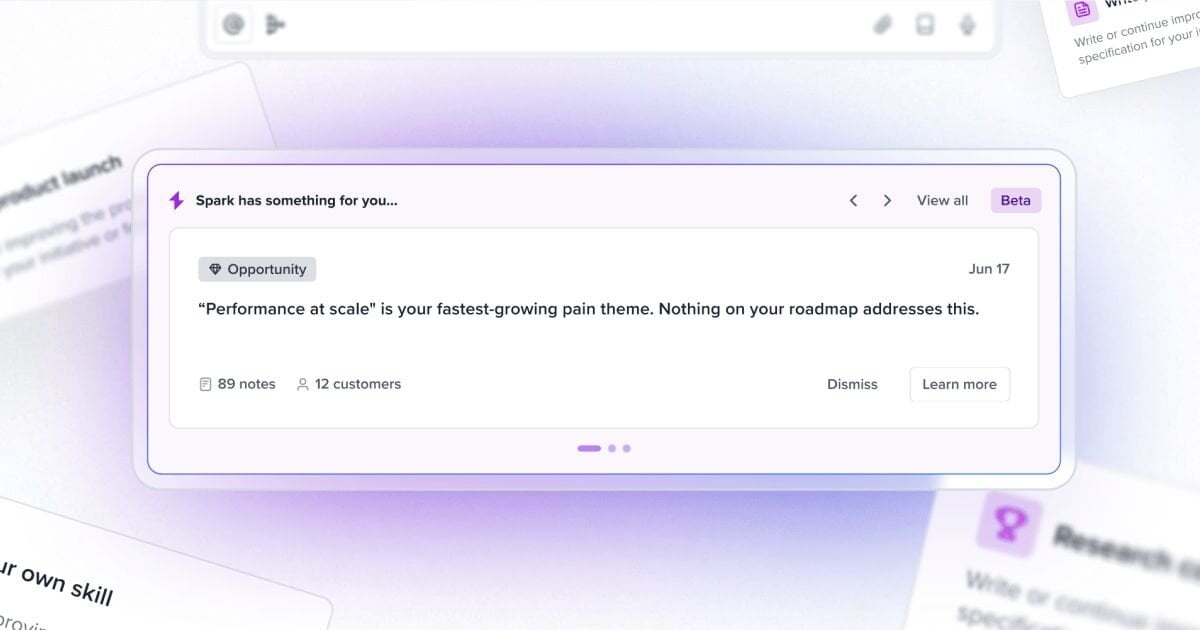

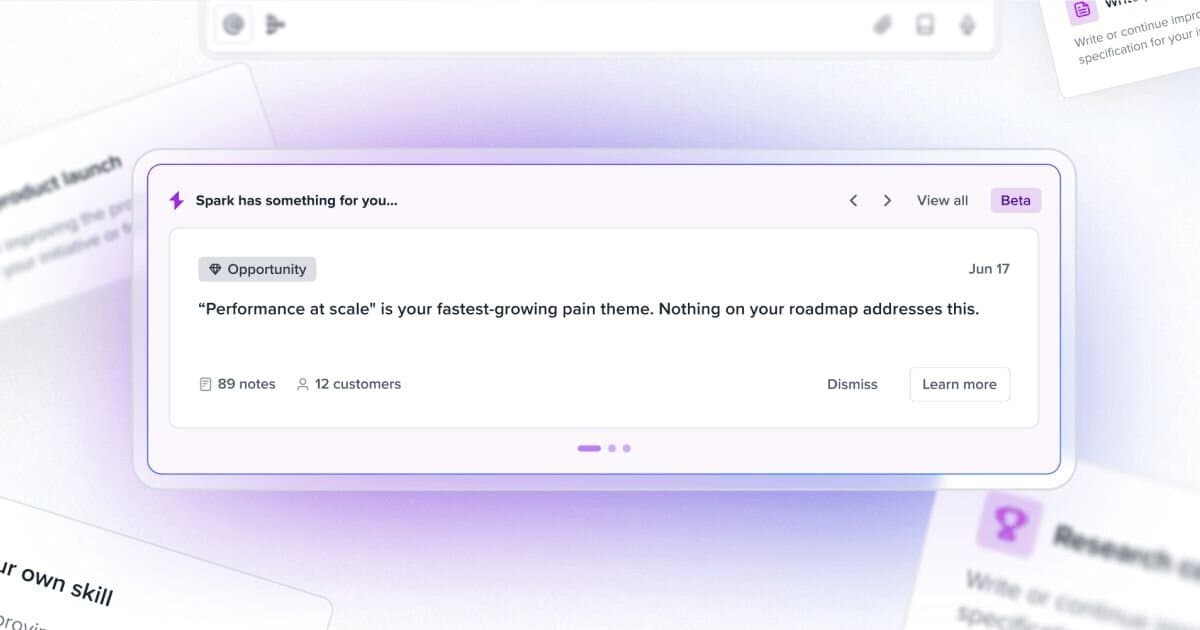
Productboard has rolled out Spark, a set of specialised AI agents built into its product management platform, and is describing the move as a rebuild of the company rather than a feature update. The Prague-founded firm says the system is meant to close the gap between gathering customer feedback and actually shipping a spec engineers can build from.
Spark is rolling out directly into existing customer workspaces. Chief executive Hubert Palan, who co-founded the company with Daniel Hejl in 2014, said the research, writing and stakeholder updates that used to happen outside Productboard now happen inside it.
What Spark actually does
Rather than one general-purpose assistant, Productboard has built several narrower agents. Each is assigned to a specific job: reading through customer feedback, drafting specs, researching competitors, or understanding a team's codebase. The company argues that a single generalist agent cannot replicate the way a product team actually splits up work. It says it tried that approach before settling on specialised agents instead.
Those agents are meant to share context automatically. They pull in a team's existing strategy documents, OKRs, personas and past decisions without anyone re-entering them for every task. Productboard also says every output from Spark links back to a specific customer note or feedback thread, a traceability claim aimed squarely at concerns about AI tools fabricating evidence.
Several of the headline features are still labelled beta:
- A "Spark Home" feed that ranks customer opportunities using strategic and competitive context, and lets a user launch a spec straight from an opportunity.
- Automatically generated, cited voice-of-customer reports pulled from a company's full body of feedback.
- A post-launch review tool that connects to analytics platforms such as Pendo, Hex and Amplitude and produces a written readout of what worked after a feature ships.
Other parts of the release are already generally available, including chat-based editing of any item in Productboard with a preview before changes save, and "Skills" that let teams turn a repeated workflow, such as a weekly status update, into something that runs on a schedule.
Specs grounded in the actual codebase
One of the more technical additions lets teams connect a GitHub repository so Spark can learn a product's architecture and constraints before it drafts a spec. Productboard is also pushing further into the engineering workflow with a new integration that sends a finished spec directly into coding tools including Claude Code, Codex and Cursor, cutting out the copy-and-paste step between product and engineering.
That push toward the delivery side of the process is notable. Product management tools have traditionally stopped at the roadmap or the spec. Productboard is now trying to stay relevant through the handoff to engineering and into the post-launch review, where it faces established analytics and workflow tools as much as other product-management vendors.
Why it matters for European software
Productboard has raised a total of $262m, including a $125m round in February 2022 led by Dragoneer Investment Group and Tiger Global Management, and employs roughly 500 people across Prague, Brno, San Francisco, Vancouver, Dublin and London. That gives it more resources than most AI-native product-management startups chasing the same workflow, but it also means Productboard is defending an established customer base rather than building one from scratch.
The launch fits a broader pattern among well-funded European B2B SaaS companies. Rather than bolting a chatbot onto an existing interface, Productboard is betting that rebuilding its core data and workflow around agents will fend off newer entrants built AI-native from day one. Palan framed the release as an attempt to keep up with constant model releases on customers' behalf, saying the company tracks "every meaningful advancement" so improvements show up automatically.
What is not yet clear from the launch is pricing. Productboard has not said whether Spark sits inside existing plans or carries a separate cost, nor has it published data on how the beta features perform once teams lean on them at scale. Palan held a webinar on 30 June to walk customers through the change. The next test will be whether the beta-labelled tools, particularly the automated post-launch reviews, hold up once they are used outside controlled demos.
What did you think of this story?
Written by
John Pulisic
92 stories on European Startup Insider
Have a story like this? Pitch it to us.
We publish founder profiles, company news and practical guides from across Europe.
More stories like this






DeepL Doubles Valuation to €2 Billion on €300 Million Funding Round
The AI translation company backed by Index Ventures is now worth double its January 2023 valuation. The Cologne-based firm is focusing on enterprise customers and expansion in the US, Asia, and Latin America.