

Basel's Atlas Bio exits stealth with $12.5m from Creandum and others to simulate trials before Phase II

Atlas Bio, a Basel startup that builds AI models to run clinical trials in software, came out of stealth on 27 October with $12.5m in total funding. The headline money is a $10m seed round led by Creandum. The company also disclosed, for the first time, a $2.5m pre-seed that First Momentum Ventures and LEA Partners led earlier.
The bet is on the most expensive point of failure in drug development. Atlas Bio wants to tell pharma teams which patients a drug is likely to help, and which it might harm, before they commit to a Phase II study. Creandum partner Katharina Wilhelm joins the board as part of the deal.
A model trained on two million human samples
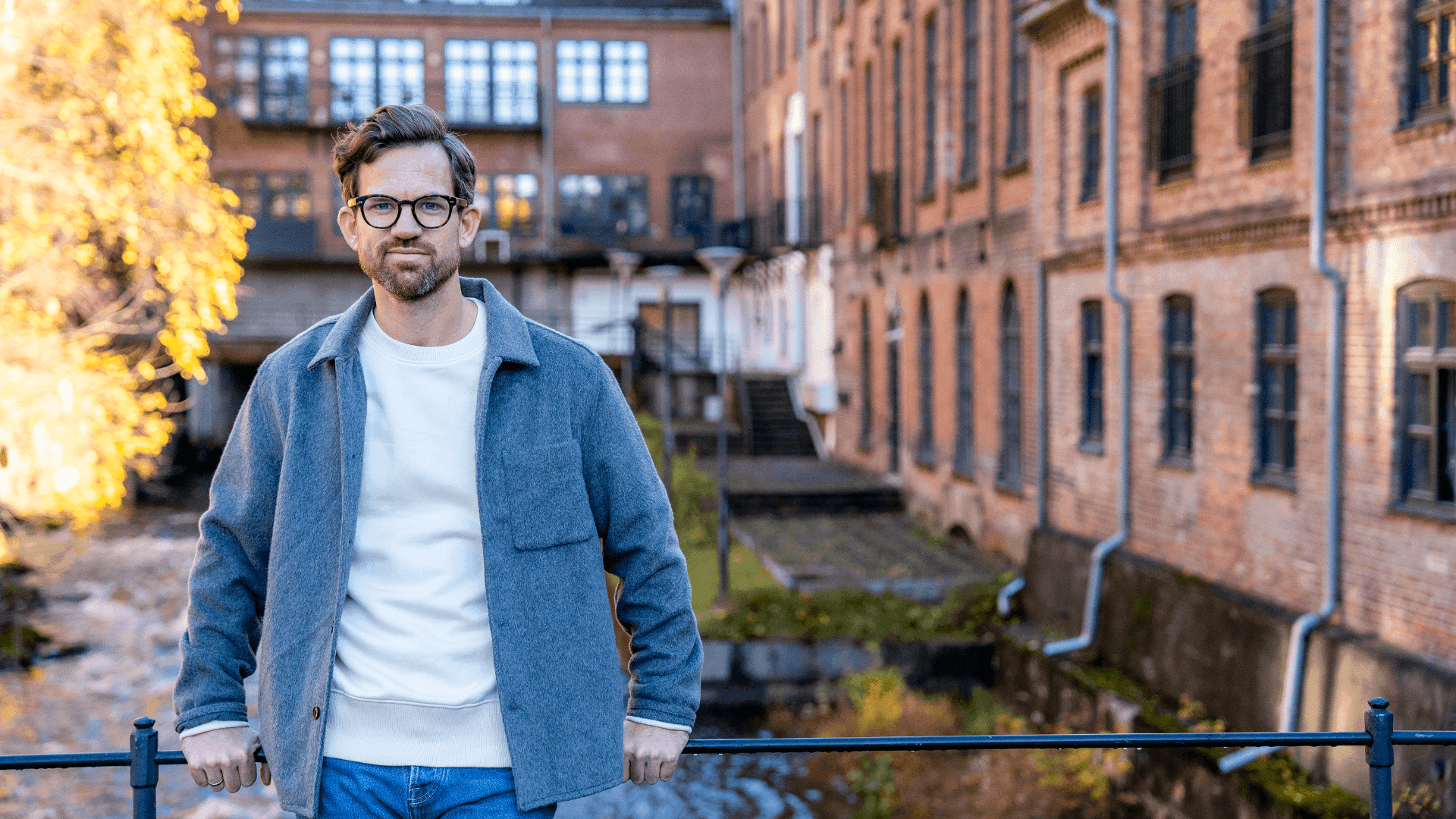
Simon Romanski, the chief executive, and Sebastian Bayer, the chief technology officer, founded the company in 2024. Romanski studied and worked at KIT, EPFL and Stanford. Bayer previously led research on large language models at Google and worked on autonomous driving in its early days. Dominik Hartl, a former doctoral fellow at the Friedrich Miescher Institute for Biomedical Research with more than ten years in drug development, runs scientific strategy.
The core product is what the company calls a foundation model of human biology. It has been trained on roughly two million RNA readouts taken from human tissue, the data that shows which genes are active in a sample and how strongly. From those patterns the model builds a virtual cohort and estimates, patient by patient, how each one would respond to a given treatment on efficacy and safety. Its first focus is immunology.
Two features set this apart from a real study. The simulation is not confined to one disease, so a sponsor can look across many indications at once to see where a molecule appears to work. And the same virtual patient, at the same stage of illness, can be given several treatments in turn. No human trial can do that. Atlas Bio says a typical simulation project takes about 12 weeks.
Bayer said the model was built to be broad rather than tied to one disease or mechanism.
"Most biological effects are not caused by drugs. To predict unknown drug effects, we need to learn biology in an unbiased way," said Sebastian Bayer, CTO and co-founder.
Why Phase II is the target
The company's case rests on industry figures it cites. A Phase II trial, it says, costs a drug maker more than $100m and runs for two to three years, and around seven in ten candidates fail at that stage. Atlas Bio adds that of the drugs that do reach approval, about 60% end up working better against a different condition than the one they were first tested for. In its reading, many molecules that fail are not useless; they were trialled in the wrong patients.
Clients use the output to decide which assets to push forward, buy in or expand into new indications, to compare a mechanism against standard of care and to look for biomarkers that mark out responders.
Romanski argues that drug development has relied for six decades on two weak assumptions: that results in mice carry over to people, and that efficacy can only be learned by dosing thousands of patients and waiting. "Human biology is finally legible to AI - and that changes the economics of this entire industry," he said.
Animal testing is the second front. In the US, the FDA Modernization Act 2.0 of 2022 removed the legal requirement to test drugs on animals before human trials, which leaves room for computational evidence. Atlas Bio says one client, a biotech in Basel, has already taken animal studies out of one specific development workflow and moved straight to human trials on the strength of the company's simulations. That claim comes from Atlas Bio and has not been independently confirmed, and the company has not published accuracy figures for its model.
Creandum's second-wave thesis
For Creandum, the round is a wager that AI's next big job in pharma lies downstream of molecule design.
"The first wave of AI in drug development focused on drug design and is well underway. Now, we are entering the second wave: clinical development," said Katharina Wilhelm, partner at Creandum.
Wilhelm also said she was drawn to the fact that Atlas Bio can run its simulations without needing access to sensitive treatment data.
Commercially, the company is early but not empty-handed. It says it already works with one of the world's ten largest pharma groups and is in talks with several others. It has not named any of them. Atlas Bio sits at Switzerland Innovation Park Basel Area on the Novartis Campus.
The whole $12.5m is a fraction of the bill for one Phase II study, and that gap is the pitch: if the model talks a single sponsor out of a failing trial, the client has saved far more than Atlas Bio has raised. The open question is proof. Atlas Bio says the new money will go on larger scientific and commercial teams, deeper validation of the platform and signing more enterprise clients before the end of 2026. Published validation against completed trials, and a named pharma customer, are the milestones investors will watch for. Romanski is listed as a speaker at Slush in Helsinki, which runs on 18 and 19 November.
Wat vond je van dit verhaal?
Geschreven door
Sandra J. Barbara
45 verhalen op European Startup Insider
Heb je een verhaal zoals dit? Pitch het bij ons.
We publiceren oprichtersprofielen, bedrijfsnieuws en praktische gidsen uit heel Europa.
Meer verhalen zoals dit

MuRay raises €7.1m, half of it public money, to scan rocket engines and turbines with muon beams
The Hamburg DESY spin-out pairs a €3.5m private round led by First Momentum Ventures with €3.6m in grants, and plans a first industrial imaging service in 2027.