

Dcubed raises €27.2m led by Warsaw Equity Group to quadruple satellite hardware output and fly ARAQYS
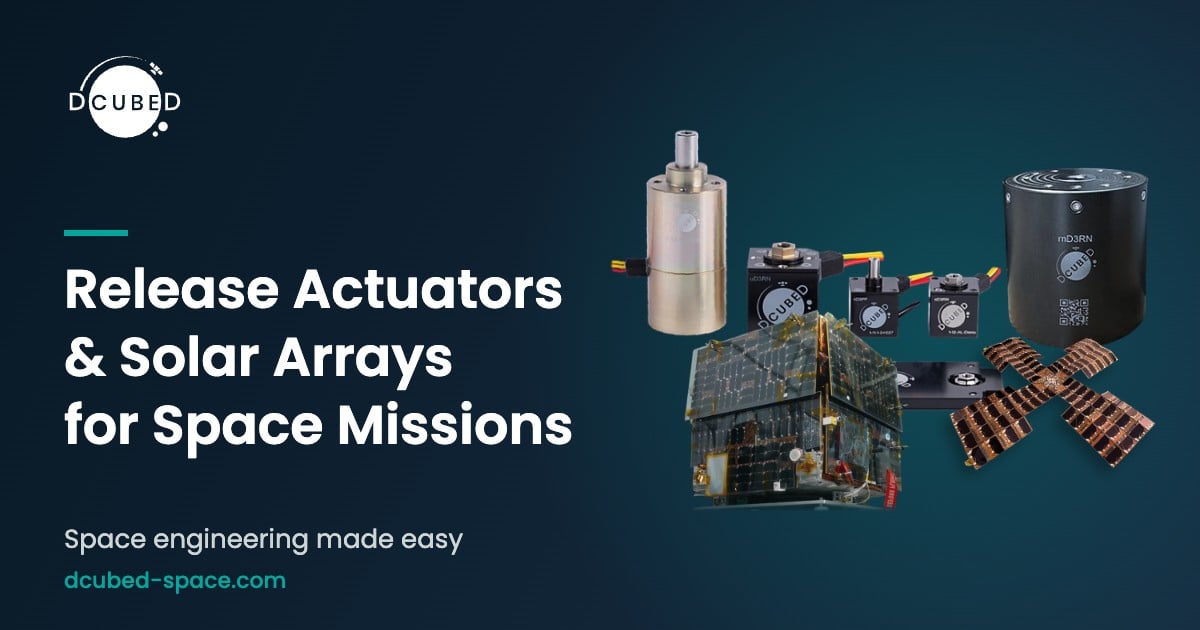

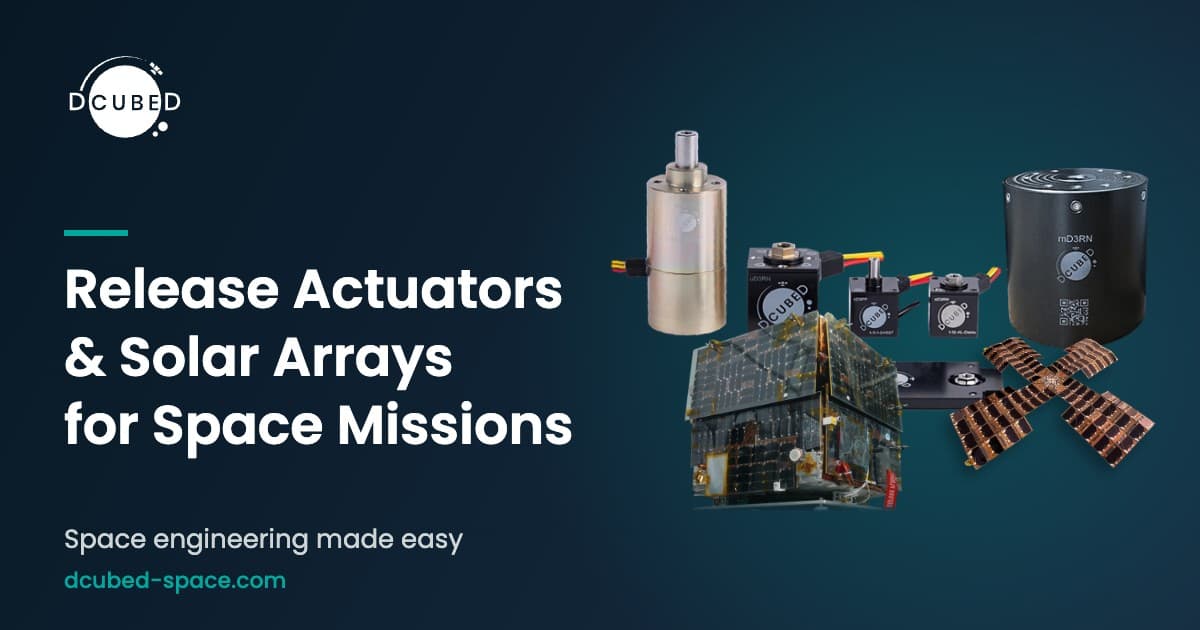
Dcubed, a satellite hardware maker based in Germering, Bavaria, has closed an oversubscribed €27.2m Series A+ round led by Warsaw Equity Group. The money is meant to quadruple its manufacturing capacity in Germany and the United States and to bring a new family of solar arrays, ARAQYS, to market.
The round is a large step up for a company that, according to earlier reports, raised around €4.4m in a Series A in August 2024. It also lands at a moment when European space suppliers are being asked to deliver parts at a pace the industry has rarely seen.
Alongside the lead investor, the EIC Fund and the HTGF Opportunity Fund came in as new backers. Existing investors BayBG and Expansion also took part. HTGF has been on the cap table since Dcubed's seed round.
A parts supplier that sells from a catalogue
Thomas Sinn founded Dcubed in 2019. The company designs and builds the release actuators that keep solar panels, antennas and other appendages locked down during launch and then free them once a satellite reaches orbit. It also makes deployable structures and solar arrays.
Its pitch is speed. Much of the space sector still relies on bespoke components with long lead times, and Dcubed instead sells standard products that spacecraft builders can order without paying for a new development programme. The company says it has more than 170 customers across Europe, the US and Asia, and that over 500 of its units are now in orbit.
Growth has been quick. Dcubed said production and revenue both more than doubled over the past year, and the team now counts 87 people split between Germering and Berthoud, Colorado, where it set up a US base around the time of its 2024 round.
"Demand for our products is going through the roof," said Thomas Sinn, founder and chief executive of Dcubed.
Sinn has framed the shortage as an industry-wide problem. With operators planning large constellations, as well as power-hungry projects such as orbital data centres and power beaming, he argued that existing suppliers cannot produce enough hardware to meet demand. "We are right now winning because we're the fastest," he told reporters.
Where the €27.2m goes
The company described two linked priorities. The first is industrialising the production of its actuators and solar arrays on both sides of the Atlantic, with the target of four times today's capacity. A large share of the round is set aside for production equipment, automation, new hires and supply-chain work. According to Sinn, that means building a new factory in Colorado and enlarging the German site.
The second priority is ARAQYS, a family of solar arrays and power products. Dcubed's argument is that cheap, plentiful electricity will become basic infrastructure for business in orbit and on the Moon, much as affordable energy did on Earth.
The first ARAQYS design is called HALO. It is a radial solar array that folds like origami, so that a large photovoltaic surface fits into a small volume on the launcher. Rather than specialised space-grade cells, it uses widely available silicon cells. Dcubed says this could make each watt 10 to 100 times cheaper and open a route from today's kilowatt-class arrays to systems producing tens, and eventually hundreds, of kilowatts.
The 2027 test flight
HALO is due to make its first flight in 2027 on a SpaceX rideshare, as part of a 2 kW in-orbit demonstration named ARAQYS-D3. Sinn has indicated the mission is planned for the middle of the year. The same flight will deploy a 10-metre boom manufactured in space, which the company sees as a second path towards much larger arrays that would not need to be folded at all.
Five power-beaming companies have signed up to fly on the demonstration. Dcubed presents that as early evidence that customers want cheaper power in orbit, although the arrays still have to prove themselves in space.
Why the investors are betting on industrial scale
The investor line-up mixes a Polish growth fund with European public money. Jan Szumada, an investment manager at Warsaw Equity Group, said his firm sees Dcubed as one of a small number of European space companies that could become core infrastructure for the global space economy. He added that the harder part will be building the management and organisation of a global industrial company, and that this is where the fund plans to help the founders.
For the EIC Fund, the interest lies in the power business. "Reliable and affordable power will be essential to the next generation of activities in space," said Helen McBreen, a board member of the fund. HTGF principal Christian Ziach said the company already has product-market fit and a strong order pipeline, and now needs to scale its factories.
The round may not be finished. Sinn said Dcubed is leaving room for a US investor to join, which would help it sell into the American defence market. For a German supplier already building out a Colorado plant, that would be the next test of whether a European component maker can compete for US defence work.
What did you think of this story?
Written by
Jascinta Clark
54 stories on European Startup Insider
Have a story like this? Pitch it to us.
We publish founder profiles, company news and practical guides from across Europe.
More stories like this




Carlsberg spinout Traitomic raises €20m led by Sofinnova to take non-GM traits to the US and Australia
Copenhagen's Traitomic, which finds useful natural gene variants in plants and microbes without editing DNA, has raised €20m. The money pays for US and Australian hiring and a move into algae and mushrooms.