

SRTD Biotech raises €31.5m seed for mRNA drugs that switch on only inside diseased cells

SRTD Biotech, a Jülich-based developer of cell-selective mRNA therapies, has closed an oversubscribed €31.5m seed round led by Mérieux Equity Partners. The size of the cheque, and the presence of venture arms from two large drugmakers, put it among the largest seed rounds raised by a European biotech, by the company's own account.
NRW.BANK and the Boehringer Ingelheim Venture Fund co-led the financing. Lilly Ventures, High-Tech Gründerfonds (HTGF) and Anobis, a family office from Freiburg, also took part. Mérieux invested through its Mérieux Innovation 2 fund.
The state development bank of North Rhine-Westphalia said it put €7m into the round from its NRW.Venture EU Tech&Scale fund. A guarantee from the European Commission under the InvestEU programme allows NRW.BANK to deploy up to €200m in extra capital into young scale-ups through that vehicle.
How seRNA is meant to work
SRTD was set up in 2019 at Forschungszentrum Jülich by Bernd Hoffmann and Heribert Bohlen. Hoffmann, who now serves as chief scientific officer, leads a research group at the centre, has more than 100 publications and has founded three companies before this one.
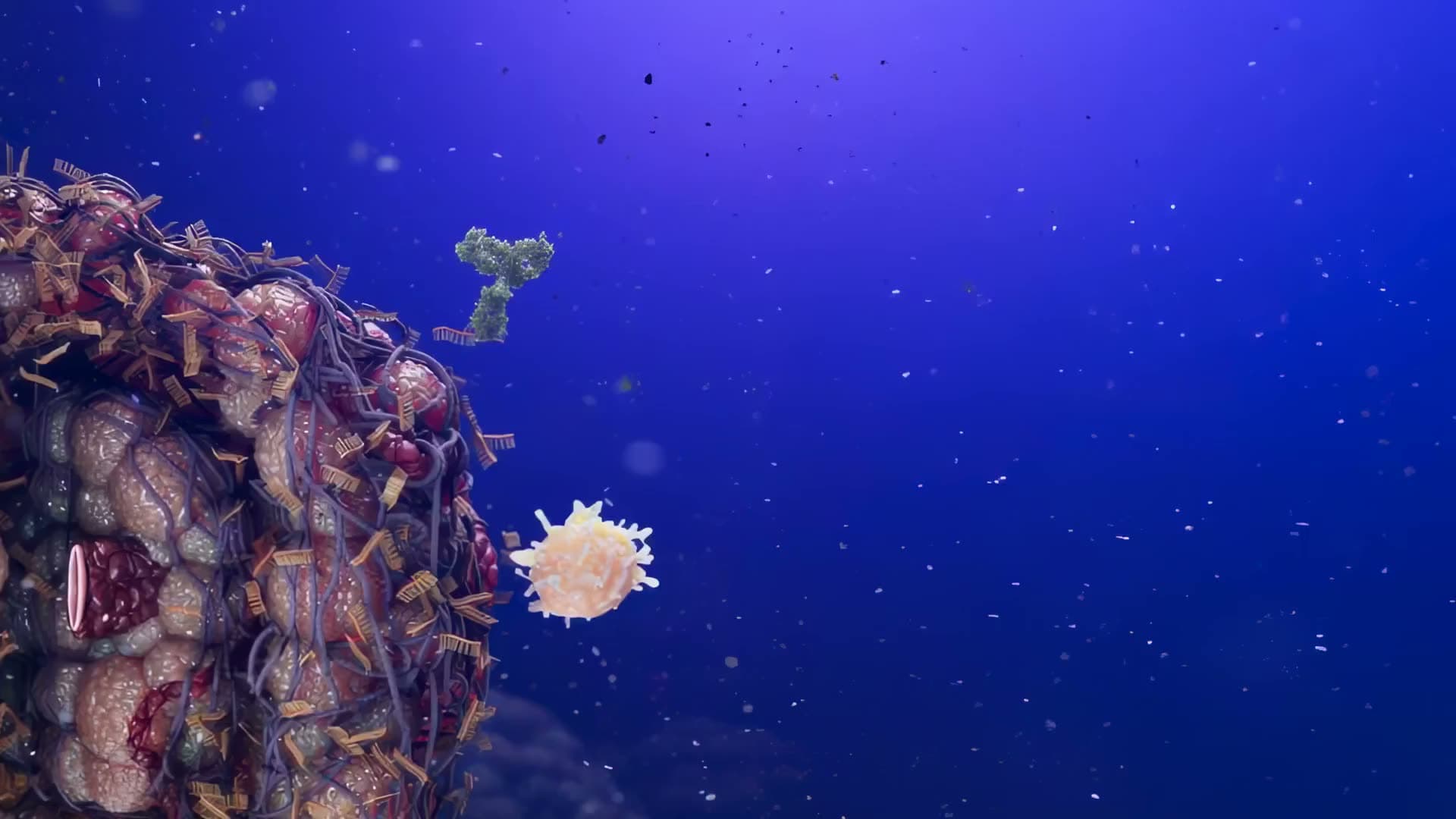
The company's approach is called selectively expressed RNA, or seRNA. Most mRNA medicines are translated into protein in whichever cell picks them up. SRTD's constructs enter cells in a dormant state and stay that way unless they detect a specific RNA marker that only a diseased cell carries. When the marker is present, the construct switches on and produces a protein designed to destroy that cell. In healthy cells the molecule is simply broken down.
The company argues this gets around two limits of current therapies. One is the off-target exposure that comes with mRNA being expressed everywhere it lands. The other is the reliance on proteins on the surface of a cell, which many targeted drugs need in order to find their target. Reading markers inside the cell widens the set of possible targets.
Alongside seRNA, SRTD has built two supporting platforms. Its fusogenic lipid nanoparticles are meant to carry the payload to the liver, lung, brain and other organs. A synthetic biology unit uses bioinformatics and AI tools to design and tune the RNA constructs.
Where the €31.5m goes
The money will fund preclinical work on a pipeline spanning oncology, autoimmune disease and fibrosis, with the aim of reaching an Investigational New Drug filing, the step that lets a company start human testing in the US. Its programmes include liver and lung cancer and severe liver disease. A first trial in humans for the lead candidate is planned for 2029, according to press reports on the round. NRW.BANK added that viral and inherited diseases are further possible uses of the technology.
Chief executive Matthias Alder called the deal "one of the largest biotech seed financings in Europe to date". He said the participation of two global pharmaceutical companies reflected the platform's differentiation.
Kristin Thompson, a director at Mérieux Equity Partners, said the technology tackles a central problem in the field: "achieving precise, selective therapeutic activity". She has also told reporters that she does not see BioNTech, Germany's best-known mRNA company, as a competitor, and suggested the two approaches could one day be combined. In her view, building precise mRNA drugs within Europe is also a question of the continent's independence in strategic technologies.
The previous funding was much smaller. HTGF led a seed round in November 2024 whose amount was not disclosed beyond being in the seven-figure range. The new round therefore marks the company's move from a research spin-out to a funded drug developer with a full leadership team.
A management team built for deals
That team was assembled around the financing. Alder took over as CEO after the round closed. He brings around 30 years as a biotech executive in the US and Europe, including the top job at Gain Therapeutics and earlier roles at Autolus, Cytos, Sucampo, Micromet and Novartis. SRTD says he has led more than $10bn of biotech transactions during his career.
Heinz Koeppl has joined as chief technology officer. He is a professor at TU Darmstadt, directs its Centre for Synthetic Biology and founded the synthetic biology platform SRTD now uses. With Hoffmann he will set scientific strategy, concentrating on finding RNA markers and using AI to optimise constructs so they activate reliably.
The newest arrival is Jens Hennecke, the chief business officer. He has spent more than 25 years on licensing and M&A, previously at SOTIO and Micromet, and runs HBCD Advisors. His brief is partnering: SRTD wants to license or co-develop its platform in disease areas outside its own pipeline.
For investors watching European RNA companies, that partnering strategy is the next test. Boehringer Ingelheim and Lilly now sit on the cap table through their venture funds, but neither has announced a research collaboration with SRTD. Whether the company can sign such deals before its planned 2029 clinical start will show how much outside demand there is for cell-selective mRNA.
Wie hat Ihnen dieser Artikel gefallen?
Geschrieben von
Jascinta Clark
50 Artikel auf European Startup Insider
Haben Sie eine ähnliche Geschichte? Pitchen Sie sie uns.
Wir veröffentlichen Gründerprofile, Unternehmensnews und praktische Ratgeber aus ganz Europa.
Mehr Artikel wie dieser



Munich's SE3 lands $30m Accel-led Series A for drone software that keeps working when GPS is jammed
Five months after a €5.5m seed, the TUM spin-out has raised $30m from Accel, Keen, Lakestar and Seedcamp to hire, open a UK office and fulfil defence contracts in Germany and Ukraine.