

microagi raises $55m seed to train factory robots on footage of real human work
Munich's microagi, founded by ex-Formula 1 engineers in 2025, has closed a $55m seed led by Hummingbird. It sits between robot makers and AI labs, adapting their models to each customer's factory.



Munich robotics startup microagi has closed a $55m seed round led by Hummingbird, with Northzone, LocalGlobe, Village Global and redalpine also investing. The company says no German startup has raised a larger seed, and it got there roughly ten months after it was founded.
The size matters less than the bet behind it. microagi does not build robots and does not train foundation models. It sells the work in between: collecting data on how people actually do physical jobs, then using it to fine-tune other companies' models so that other companies' robots can do one specific task in one specific plant. The valuation was not disclosed.
A middle layer, by design
The company's main product is Atlas, a data and deployment platform for industrial customers. microagi puts its own recording kit, including cameras and sensor gloves worn by workers, into live production lines. It then multiplies that data in simulation and uses it to adapt existing robot models to the job. Engineers from microagi work on site with each customer to install the systems and keep retraining them as new data comes in.
Atlas is meant to work with any robot or any model. microagi lists NVIDIA and Unitree as partners, and pitches the approach as a way for manufacturers to avoid tying themselves to a single vendor's hardware or roadmap. Chief technology officer Nico Nussbaum leads the on-site integration work.
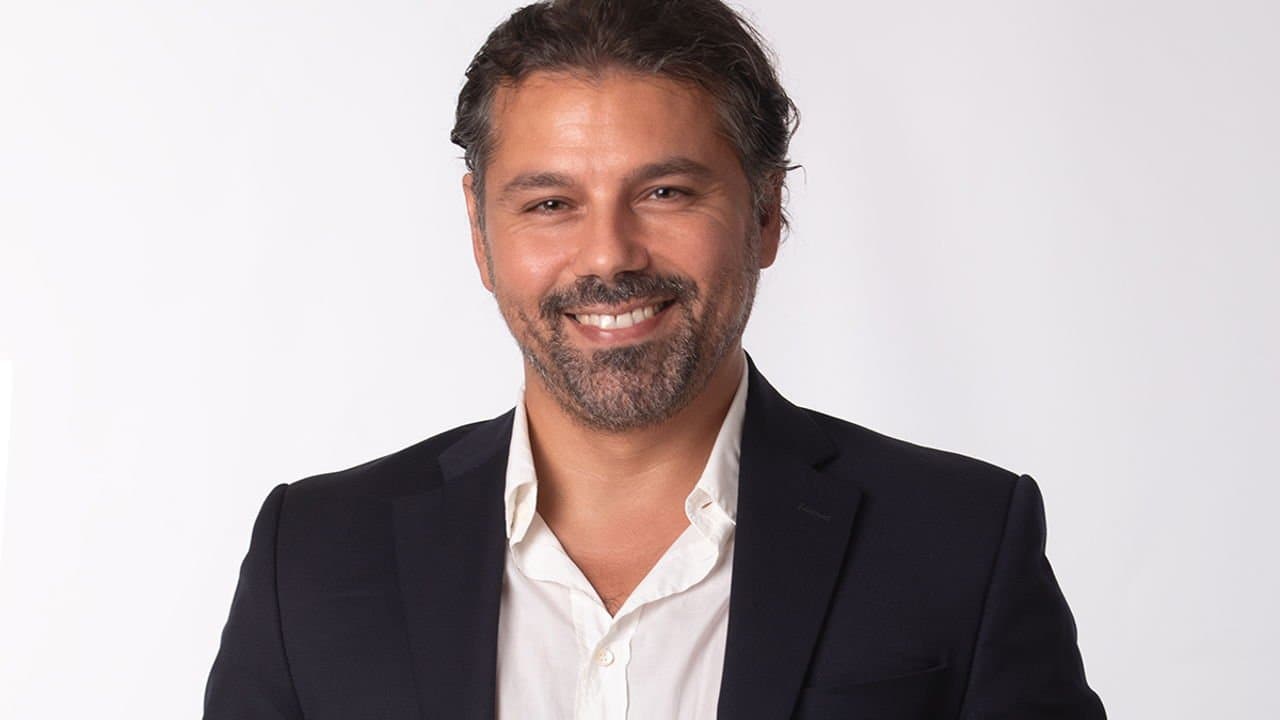
Founder and chief executive Bercan Kilic, who joined Red Bull Racing as an aerodynamicist in 2023, said five companies are now gathering data through the platform. Their sectors are automotive, logistics and food. One of them is preparing to run robots on a production line. He would not say which AI labs supply the models.
"We provide the labs with data, they provide us with models, and then we layer on proprietary data to make our customers happy," Kilic said.
Why it ended up filming cleaners
The original plan was deployment only. That changed when the team concluded that most robot models were too weak to serve as a starting point. Kilic compares it to hiring: an adult can learn a factory task in a week, while a child may never manage it. In his view, today's robot models are still at the child stage.
The fix was shift, a separate data operation that pays people to record themselves doing physical tasks and sells the footage to labs building robot models. It drew wide attention this year for offering free apartment cleaning in New York to people willing to let the cleaners film the dishes, mopping and laundry. In the week of the round, the same offer moved to cooking, with San Francisco households getting a private chef at no cost. shift is now active in 15 countries, with over 20,000 paid contributors.
That puts microagi up against Scale AI, Turing and micro1, which all sell some version of human-generated training data. Coverage in Germany has also raised questions about privacy, since the cleaning offer brought head-mounted cameras into people's homes. Another concern is margins: if every customer needs microagi engineers on site, the business may look more like a services firm than a software company.
The underlying problem is real. Language models learned from text that already existed online. Robots have no comparable store of recorded physical work, which is why companies are now paying to create one.
The European pitch and where the money goes
microagi is aiming first at European manufacturers, and its case leans on demographics and on China. By the company's figures, China accounted for about 295,000 of the factory robots installed worldwide in 2024, or 54%, against roughly 85,000 in Europe. The US installed 34,200. microagi also says Europe produces about 15% of global manufacturing output, half China's share, and that close to 40 million EU workers are over 55. Kilic's argument is that factories will lose their most experienced staff this decade and have no one to replace them.
Hummingbird managing partner Firat Ileri, whose earlier investments include Lovable, Kraken and Etched, framed the deal as keeping talent at home.
"Europe trains some of the best roboticists in the world, then watches them build companies in California," Ileri said.
The new money will go on computing power, on growing shift's network of contributors and on a US operation run from New York. The company also plans more Atlas deployments with large industrial groups and more engineering and research hires. microagi has 37 employees, with about 75 more at shift. Its headquarters are in Munich, its research hub is in Zurich, and it has an office in London. Its team includes hires from ETH Zurich, the Technical University of Munich, DeepMind, Apple and Replit.
Kilic has four co-founders, among them former Mercedes F1 engineer Yoan Iliev and Anton Poletaev, who previously worked as a researcher at the Alan Turing Institute.
A long way from one production line
Several announcements have followed the round. Six days later microagi said it would train its models on Google Cloud, using NVIDIA Blackwell GPUs and Gemini models to process multimodal data; terms were not disclosed. In September its Zurich computer-vision team released microSLAM, which turns ordinary first-person video into 3D environments for training robots. The same month, Animesh Garg, a former NVIDIA research scientist and chief science officer at Apptronik, joined as chief research officer to lead post-training of models for customer tasks.
Kilic likens robotics today to language AI in the GPT-2 era: the recipe for scaling is not settled, but he thinks it is close. His target is far larger than anything the company has shown so far.
"In five years, if we haven't deployed more than 20 million or 30 million robots, it's a big failure," he said. When the round closed, the count of customers close to putting robots on a factory floor stood at one.
Cosa ne pensi di questo articolo?
Scritto da
John Pulisic
113 articoli su European Startup Insider
Hai una storia come questa? Proponila.
Pubblichiamo profili di fondatori, notizie aziendali e guide pratiche da tutta Europa.
Altri articoli simili






Aptadir Therapeutics lands €40m seed led by 4BIO Capital to take its Fragile X RNA drug towards the clinic
Milan biotech Aptadir has closed a €40m (about $45m) seed round led by London's 4BIO Capital, two years after a $1.6m pre-seed. The money backs its RNA drugs that aim to switch silenced genes back on.