

Tumbleweed lands €6.9m seed, Austria's biggest in spacetech, to build its own re-entry capsule
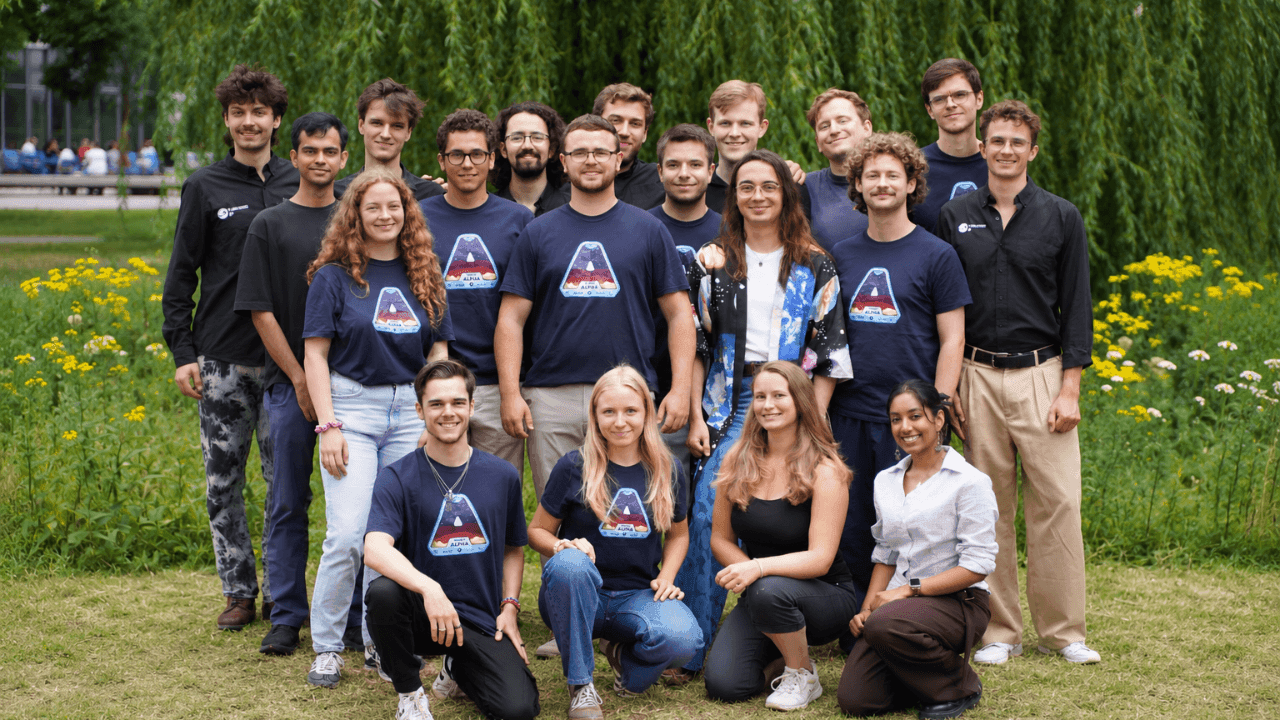

Vienna-based Tumbleweed has raised a €6.9m seed round led by PactVC, which the company describes as the largest seed ever closed by an Austrian spacetech startup. The money arrives four months after its first satellite, Oasis Alpha, reached orbit, and most of it is aimed at a capsule that can bring experiments back to Earth.
Vanagon Ventures, EWOR and Prototype Capital, an earlier backer, joined the round alongside international investors and business angels. The choice of lead is the unusual part. Pact is a health-tech investor rather than a space fund, and chief executive Julian Rothenbuchner said the startup picked it for its contacts in healthcare across Europe and the US. His reasoning is that customers care about what weightlessness does to cells and materials, not about space itself.
A satellite first, then the fundraise
Tumbleweed was set up in November 2024 by Rothenbuchner, chief operating officer Leonhard Goliasch and chief technology officer Guillaume Brault, a space engineer who previously worked at Thales Alenia Space, Rocket Lab and the Dutch research body TNO. It has its headquarters in Vienna and a second office in Delft, and now employs about 25 people.
The company grew out of a student project. In 2016 Rothenbuchner and classmates at Vienna's Sir Karl Popper School designed a wind-blown Mars rover modelled on the plants that roll through Western films. The idea won a competition, drew support from the European Space Agency and later turned into a volunteer research network of several hundred people. By 2024 Rothenbuchner had concluded that grant-funded science moved too slowly for him, and he took two colleagues from that network into a commercial venture.
Its early funding was modest. Rothenbuchner said the founders started with savings in the tens of thousands of euros, and the company had help from the ESA BIC Austria incubator and the CASSINI programme run by the EU space agency EUSPA. Oasis Alpha was designed and built in nine months for under €500,000. It flew on SpaceX's Transporter-17 rideshare on 7 July 2026, carrying experiments from four customers, among them Delft University of Technology and the European Space Resources Innovation Centre. None had flown anything in orbit before. The mission was sold out a year ahead of launch and paid for in advance, though Rothenbuchner has admitted that not everything on the flight went to plan.
Staff have bought in too. More than a third of employees have put their own money into the company across its rounds, a combined sum in the six figures, and Rothenbuchner said the request came from the team.
Selling a lab in a box
The product is the Pod, a pre-certified container that supplies power, data links and an onboard computer. Because each Pod is sealed off from the rest of the spacecraft, a fault inside it stays inside it, which lets customers fly hardware without the years of qualification work space missions usually require. Researchers fit their equipment, test it in their own labs and hand it to Tumbleweed, which deals with certification, launch and operations. In orbit, the experiment is run remotely, much like renting a server from a cloud provider.
Pricing starts at €15,000, covering the Pod, engineering support, launch and mission operations, with lead times of two to three months. Oasis Alpha customers got experiments running in three to four months for about €30,000. The company says around 40% of prospects become customers and roughly two-thirds arrive through inbound enquiries.
"I don't think we need to convince researchers that microgravity has interesting applications. We need to convince them that it's accessible," Rothenbuchner said.
Early work has covered materials science, such as recrystallisation, and protein production using bacteria. Upcoming payloads include studies on immune ageing, inflammation, cardiovascular decline and wound healing. So far the buyers are mostly academic and clinical. Rothenbuchner's next targets are state research bodies and CROs, and after them industrial users in pharma, semiconductors and photonics.
Where the €6.9m goes
A large share will fund the re-entry vehicle. Most commercial uses need the material back on the ground, and Tumbleweed said it struggled when it relied on other companies' platforms. Oasis Beta, scheduled for 2028, is meant to return samples by parachute to a remote landing area outside Austria. Since a full return test needs its own space mission, the team is validating the design with simulations and targeted physical tests. Before that, the company plans at least three launches in 2027 and expects to carry more than ten customers on them, with payloads already coming from medical, biotech and agritech labs.
Launch access is the other pressure point. Rideshare room on SpaceX flights is getting tighter and more expensive, so Tumbleweed is talking to providers in the US, Europe and Asia-Pacific, has signed a memorandum of understanding with SIRIUS Space Services and offers suborbital flights giving a few minutes of weightlessness for early tests.
"We're not dependent on American launch providers, and we can't afford to be," Rothenbuchner said.
Rivals have far deeper pockets. Varda Space Industries in the US has brought six capsules home and recently closed a $251m Series D. Closer to home, return vehicles are in development at The Exploration Company and ATMOS Space Cargo, and Welsh startup Space Forge wants to produce chip materials in orbit. Some investors also doubt the economics: an analysis by Atlas Venture's Cody Tranbarger argued that in-orbit processes yield milligrams to grams of material at best, that no regulatory framework yet exists for space-made drugs, and that the payoff is more than a decade away.
Tumbleweed is betting that cost and turnaround time, not the best capsule, will decide the market. Its next marker is the three 2027 flights, along with a promised "late integration" option that would let customers load samples two days before launch rather than two months.
Jak oceniasz ten artykuł?
Autor
Mark T. Schwahn
51 artykułów na European Startup Insider
Masz podobną historię? Zaproponuj ją nam.
Publikujemy profile założycieli, wiadomości o firmach i praktyczne poradniki z całej Europy.
Więcej podobnych artykułów

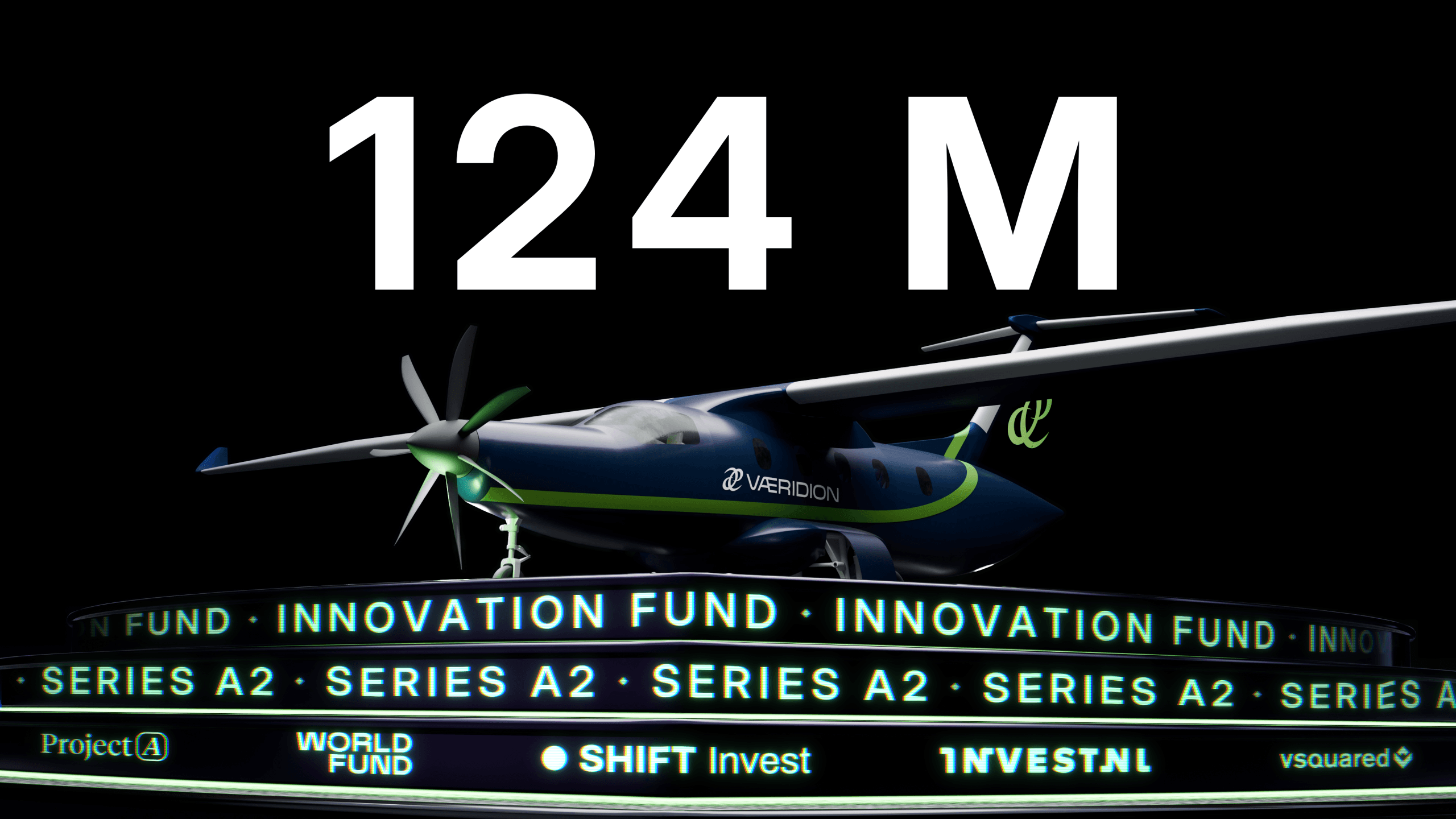




VÆRIDION raises €30m Series A2 and wins EU pick for €94.5m grant to build electric Microliner in Bavaria
The Munich maker of a nine-seat battery-electric aircraft has €30m from Dutch-led investors for its first conforming prototype, and an EU Innovation Fund selection for a €94.5m assembly-plant grant.