

Charleroi's Aerospacelab builds satellite platforms, payloads and whole constellations in-house
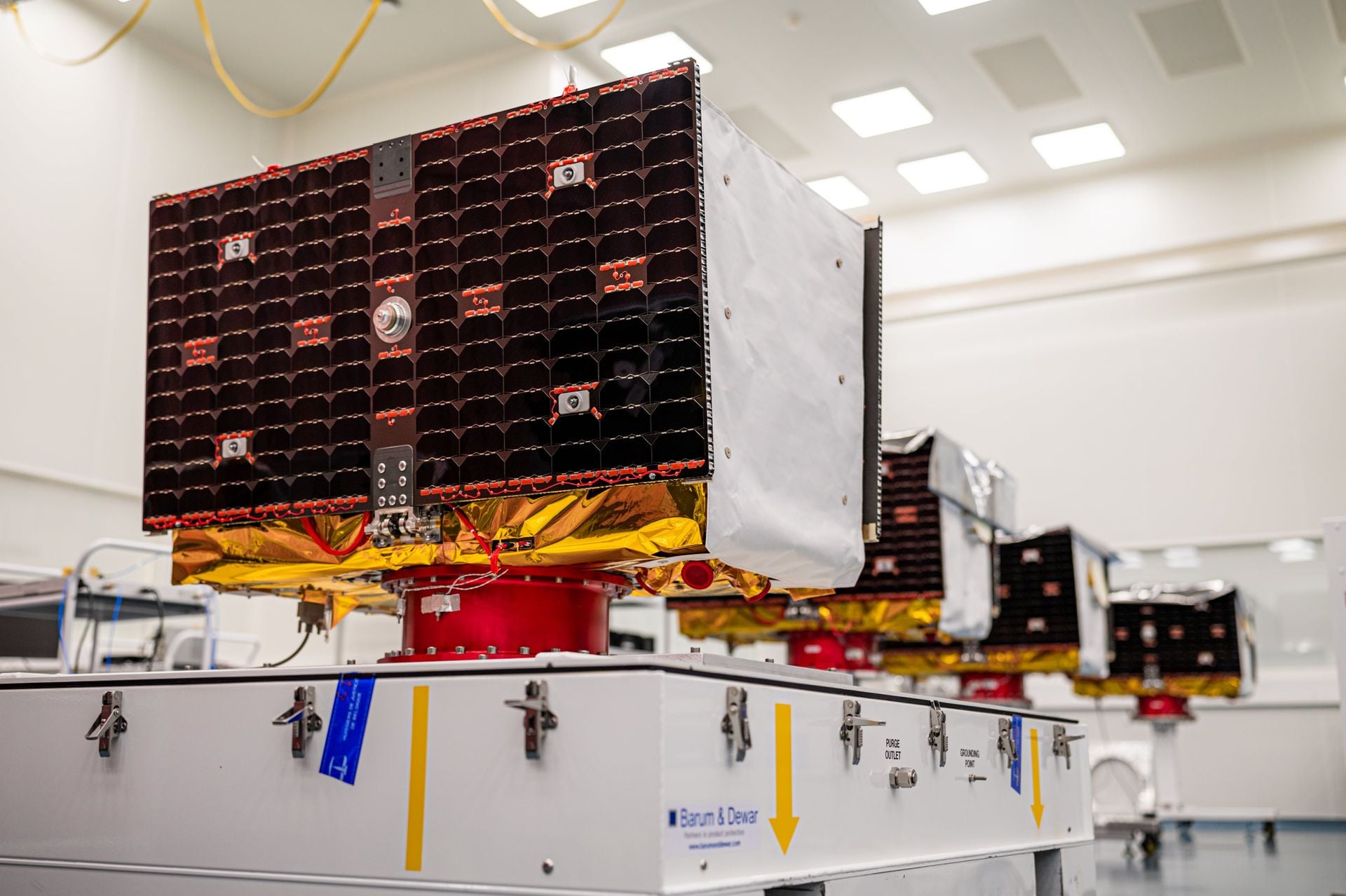

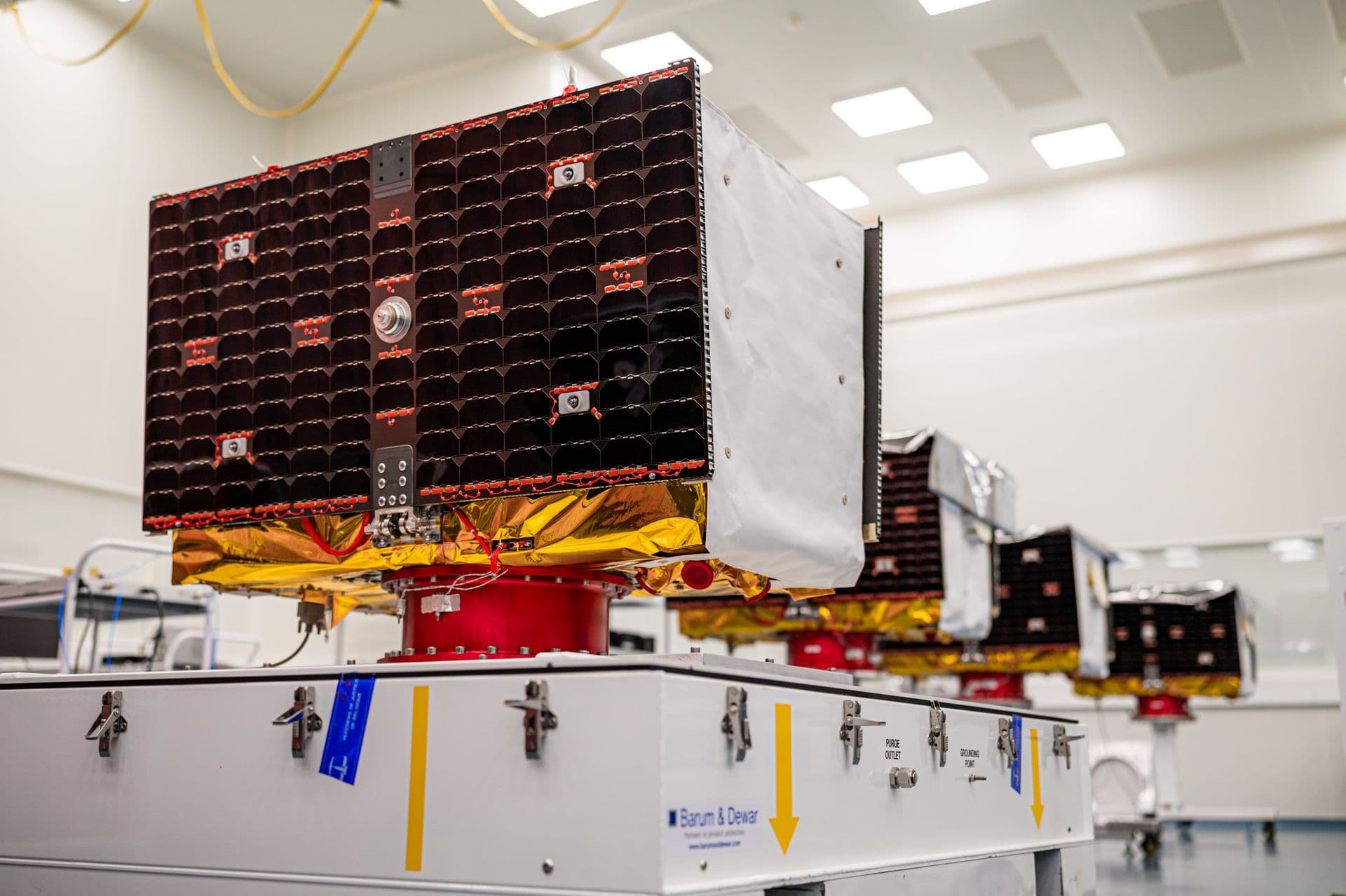
Aerospacelab builds satellites for other people's missions: the platform that carries an instrument, the instrument itself, or the whole spacecraft and its operations. The Belgian company says about 90% of what goes into its satellites, from hardware components to software, is made in-house, and it now has a factory in Charleroi sized for up to 500 satellites a year.
That pitch has won it a central part in what the company calls the largest contract in EU space history. In September 2026 it was picked to build 264 low Earth orbit satellites for IRIS², the European Union's secure connectivity network, under a contract worth about €2.4bn.
Three ways to buy a satellite
The company sells along three lines. A customer that already has a payload can buy a platform, or bus, from its Versatile Satellite Platform range, known as VSP. The range runs from off-the-shelf models to custom designs, and the VSP-300 line is the one Lockheed Martin chose in September 2026, when it ordered two platforms through Aerospacelab's US subsidiary.
A customer that already has a platform can buy a payload instead. On the Earth observation side the company lists multispectral, hyperspectral and very high resolution optical sensors, synthetic aperture radar and radio frequency sensing. For telecoms it offers narrowband, broadband and secure connectivity.
The third option is the full mission. Aerospacelab designs the satellite, builds it, and operates it, starting with a single in-orbit demonstration and scaling up to a constellation. The satellites it plans to make in the new plant weigh between 150 kg and one tonne.
Who buys from a Belgian satellite maker
Its customers are governments and companies, often on the same hardware. For the public side the firm stresses that its designs are ITAR-free, meaning they do not depend on US export-controlled parts, and that its supply chain is European.
The customer list on its website and in its announcements gives a sense of the mix:
- Eutelsat, which leads the LEO segment of IRIS² and ran the competition that Aerospacelab won.
- Lockheed Martin, for the two VSP-300 platforms.
- MDA, which has been reported as ordering 200 units of critical subsystems for its new AURORA satellite line.
- Redwire, its partner on MATTEO, a mission funded by Belgian Defence and built in Belgium.
- Xona, the navigation company behind Pulsar, which says working with Aerospacelab will get its next satellites to customers sooner.
- Loft Orbital, which signed a memorandum of understanding in November 2026 to look at pairing its software and operations with Aerospacelab's high-power platforms.
Benoît Deper, the founder and chief executive, framed the Loft deal around computing in space.
"Orbital computing needs an industrial foundation: high-power, reliable spacecraft that can support demanding workloads and be produced at scale," Deper said.
Where it is based and who runs it
Deper started the company in 2018. He trained as an engineer at UCLouvain, worked at NASA and at the European Space Agency, where he was a young graduate trainee in systems engineering, and was later lead engineer and CTO of Swiss Space Systems. The executive team also includes Tina Ghataore, previously chief commercial officer of the laser communications firm Mynaric and president of Mynaric USA. Mathieu Costes, an operating partner at AV, chairs the board.
The company outgrew its first premises in Louvain-la-Neuve and now centres on the Megafactory in the Marcinelle district of Charleroi, which King Philippe opened on 24 November 2026. It also lists offices in Mont-Saint-Guibert, Toulouse, Lausanne and Los Angeles. At the opening, the company's headcount across all sites was put at about 1,250. It has also bought Amos, a Liège firm that designs opto-mechanical systems for astronomy and space.
The plant cost about €100m. It has 7,000 m² of production floor and 4,000 m² of cleanroom on a 20,000 m² site, and the first satellites are due off the line in early 2027.
Funding as background
Aerospacelab has raised two Series B rounds. The first, €40m in 2022, was co-led by Airbus Ventures and XAnge. The second, an extended Series B of €94m closed in August 2025, combined €56m of funding with a €38m commitment from a European financial institution, and helped pay for the factory.
The name on the door is about to change. From 30 November 2026 the company will trade as Ectro, a word taken from ectropy, the scientific term for a system growing more ordered. Deper said the old name was often misspelled and that the "lab" no longer fitted a company of its size.
What did you think of this story?
Written by
Sandra J. Barbara
62 stories on European Startup Insider
Have a story like this? Pitch it to us.
We publish founder profiles, company news and practical guides from across Europe.
More stories like this






Lausanne's coprod makes robot modules that share one EtherCAT bus and one API
Founded by three EPFL graduates in late 2024, coprod sells sensing, motion, power and battery modules for robots, all run on one real-time EtherCAT bus and driven from a single C++ and Python interface.