

Google's first space data centre satellite goes online and writes poetry
Google's Project Suncatcher prototype has run its first AI prompt in orbit. Asked for a haiku about space, the Gemma 4 model on board wrote one and sent it down as the satellite passed over Svalbard.
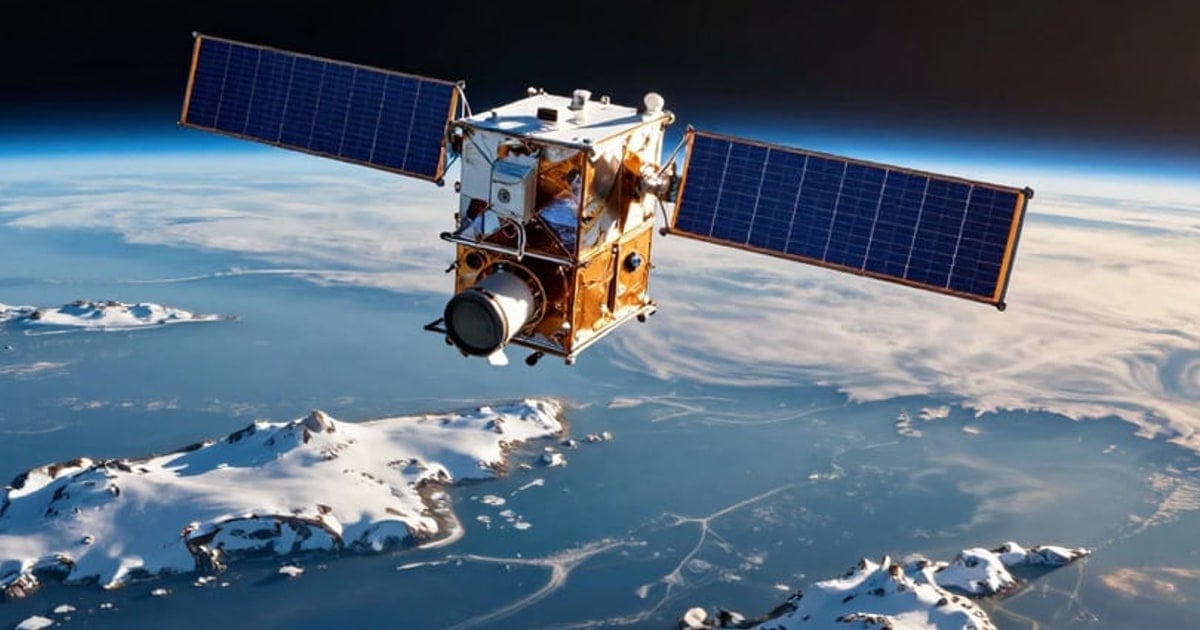

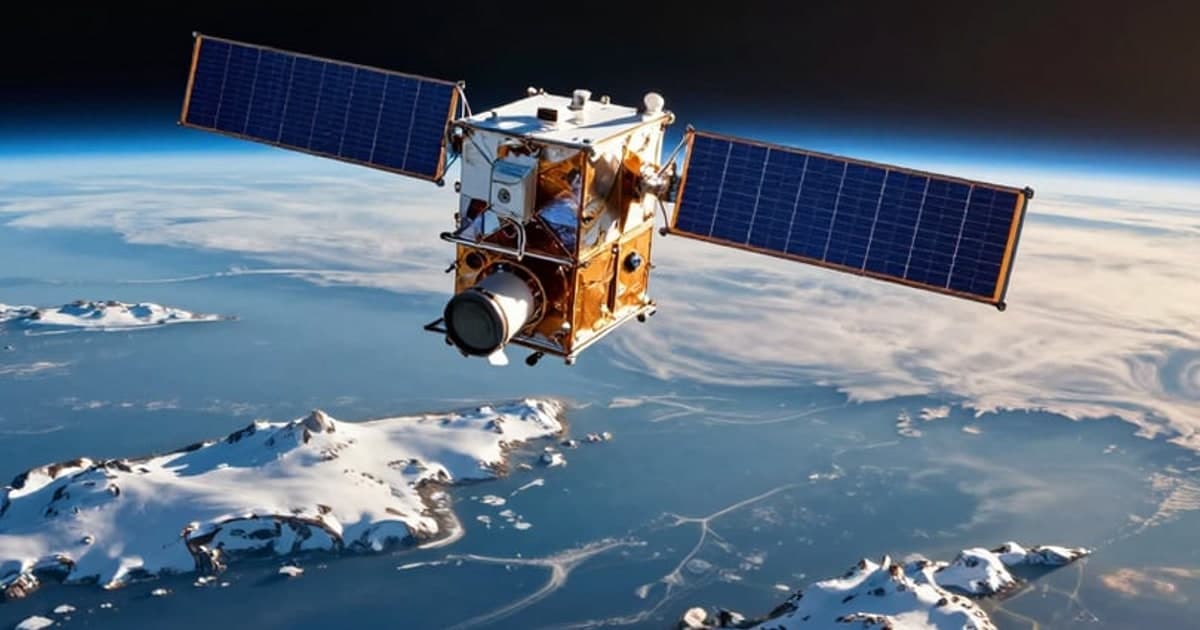
Google's experiment in putting AI computing into orbit has produced its first piece of work, and it is a poem.
The company said on 30 October that the prototype satellite for Project Suncatcher, its long-range research effort into running data centre hardware in space, had answered its first prompt. Engineers on the ground sent a request to Gemma 4, the open model from Google DeepMind that was loaded onto the spacecraft before launch, and asked it for a haiku about being in space. The answer came back during a ground-station pass as the satellite flew over Svalbard, the Norwegian archipelago in the Arctic:
“Blue marble below / Data streams in silent grace / Starlight feeds my core.”
Google called it its "Hello World" moment. The poem itself is not the point. What matters is that a data centre class chip switched on in orbit, took an instruction from Earth, ran a model and returned the result.
Three weeks of checks before the first prompt
The satellite went up on 1 October on a SpaceX Falcon 9, sharing the ride with more than 100 other spacecraft. It was built with Planet, the Earth-imaging company. Since launch, the Suncatcher team has worked through a commissioning list that took about three weeks. It powered up the host computer and the trays holding the Tensor Processing Units (TPUs), Google's own AI chips, and ran a first round of machine learning tests.
After the haiku, the engineers moved on to space-themed limericks. They also sent prompts asking the model to report on the state of the payload and the conditions around the satellite. A Google spokesperson told TechCrunch the spacecraft was operating nominally.
On paper the hardware is modest. The satellite carries four TPUs and can generate up to 1 kilowatt of power. That is not enough to run them together. Only one chip can be switched on at a time, and for roughly 20 minutes before power becomes the limit. Those short sessions also have to line up with the windows when the satellite can talk to a ground station.
Radiation is the real exam
The poetry was a warm-up. The tests that decide whether Suncatcher has a future come next, and they are about heat and radiation.
In orbit, high-energy particles can strike memory and flip a stored bit from one value to another. A flipped bit can quietly corrupt data without setting off the checks that usually catch hardware faults. Google has already fired particle beams at its TPUs in accelerators on Earth. Those trials suggested that inference, the work of answering prompts with a model that is already trained, copes with radiation fairly well. Training a model looked more fragile. Now the team gets to measure the effect in the real environment instead of a lab.
Heat is the other problem. A data centre on the ground cools its chips with air or water. In space there is no air to carry heat away, so it has to be radiated off the spacecraft, which is much harder to do at scale.
Two linked satellites planned for 2027
If the chips hold up, Google plans to launch two more satellites in 2027. They will generate more power and test optical links between spacecraft, so that satellites flying close together can pass data to one another directly.
That link is central to the plan. Google's longer-term idea is a cluster of satellites that share one large computing job between them, rather than each running its own small task. Most rivals are taking a simpler route. Starcloud and Cowboy Space expect to run inference on single satellites, and SpaceX, which plans orbital data centres of its own with laser connections, intends to space its satellites too widely for them to split one workload.
The economics are still far from settled. Getting heavy hardware into orbit is expensive, broken parts cannot be swapped by a technician, and the whole idea leans on launch prices falling sharply. Both Google and SpaceX would need Starship, SpaceX's heavy rocket that is still in development, to become fully and quickly reusable. In a peer-reviewed analysis released in October, Suncatcher researchers estimated that Starship would have to fly about 1,800 times to bring costs down as far as SpaceX managed with its earlier rockets. Alphabet, Google's parent company, also holds a large stake in SpaceX.
Why the industry is looking up
The pull is energy. AI is consuming electricity, land and grid capacity at a rate that has made new data centres a fight in many places. In the right orbit, solar panels get sunlight for much longer than panels on the ground, which could give orbital computers a large and steady supply of clean power.
For now nothing changes for people who use Google's AI. There is no new product, and developers cannot send their own workloads into orbit. Google describes Suncatcher as a classic moonshot aimed at infrastructure that might make economic sense in the 2030s.
That is a long way off. But a satellite that can take a prompt and write a short poem about the view is a working start, and the next months of radiation and heat data will show whether the chips can keep doing it day after day.
Cosa ne pensi di questo articolo?
Scritto da
Mark T. Schwahn
46 articoli su European Startup Insider
Hai una storia come questa? Proponila.
Pubblichiamo profili di fondatori, notizie aziendali e guide pratiche da tutta Europa.
Altri articoli simili




microagi raises $55m seed to train factory robots on footage of real human work
Munich's microagi, founded by ex-Formula 1 engineers in 2025, has closed a $55m seed led by Hummingbird. It sits between robot makers and AI labs, adapting their models to each customer's factory.